Category: Business

  • Group Faults Atiku’s Agenda To Sell Refineries

    Group Faults Atiku’s Agenda To Sell Refineries

    The National Union of Electricity Employees (NUEE) has criticized the Peoples Democratic Party (PDP) presidential candidate Atiku Abubakar’s three-point agenda, which includes privatization of refineries, the rail sector, and the Nigerian Transmission Company (TCN).

    According to the union, it was challenging the former Vice President to a national television debate to explain how his regressive economic policies will benefit the people.

    Read Also:  Mass burial of the victims killed in the attack in Ondo Church is scheduled to take place on June 17

    Comrade Joe Ajaero, the union’s General Secretary, revealed this over the weekend in Abuja.
    “Our attention has been drawn to newspaper reports released by the PDP presidential candidate, Alhaji Abubakar Atiku, outlining a three-point agenda aimed at privatizing refineries, rail, the Transmission Company of Nigeria (TCN), and breaking monopolies in all other infrastructure operations,” he said.

    According to him, Alhaji Abubakar Atiku was the Chairman of the National Council on Privatisation (NCP), a government committee tasked with overseeing the privatisation program launched by the Olusegun Obasanjo administration to deal with the disposal of state-owned enterprises.

    How many of the over 60 enterprises privatized since he became Chairman of the NCP in 1999 are operating optimally, he asked? From the glorified warehouse that is the Osogbo Steel rolling mill to the abysmal performance of the privatized Generation Companies (GenCos) and Distribution Companies (DisCos) eight (8) years after privatization.

    “Despite the Federal Government pumping in about N2 trillion as subsidy to these privately owned companies, power generation has nosedived from 4,000 megawatts to 2000 megawatts in nine years,” he added.

    Read Also:  Asiwaju Bola Ahmed Tinubu pays a visit to H.E Dr Ogbonnaya Onu (Video)

    “Who are these private companies’ ‘faceless’ owners, and why are they shrouded in such secrecy?” Many Nigerians have lost their jobs as a result of the privatisation agenda, many Nigerians have died as a result of non-payment of entitlements, many Nigerians are sick and hungry, and their children have been thrown out of school as the onslaught against the Nigerian masses in the name of privatisation continues.”
  • Obidike tells FG to send Nigerian students back to universities

    Obidike tells FG to send Nigerian students back to universities

    In the midst of failed negotiations and counterefforts by the Academic Staff Union of Universities (ASUU), which has kept Nigerian students in public universities at home for four months, a human rights and accountability advocate, Hon. Obidike Chukwuebuka, has requested the Federal Government to send students back to school and improve the country’s educational system, saying that education makes the economy better.

    In a statement, Obidike made it clear that the more education and accomplishments a person has, the better job opportunities they will have. “People who grew up poor but went to school have a good chance of changing their lives, which could help reduce the number of poor people in society. Education helps countries’ economies grow because it’s about learning things and being able to use them wisely in our own lives and in ways that help other people.

    “In today’s world, education is very important. To be able to contribute to society, one needs to learn about culture, history, and other important things. Education doesn’t just teach people about (college) subjects; it also teaches them how to lead with their emotions and true values. People who are educated can easily tell the difference between right and wrong, which helps to lower the crime rate. Bad things are happening all over the world, and only good leaders can lead us in the right direction.

    “Digital education helps people and groups all over the world get in touch with each other. There are no longer any borders. “Being able to talk to and share ideas with people from other countries and cultures broadens our horizons and helps us understand and appreciate each other,” Obidike said.

    Since February, the Academic Union’s strike has made it hard for public universities to teach. The fact that several meetings have ended in failure shows that the government is not ready to get the students back into their classrooms.

    “As a result, I’m asking the federal government to send kids back to school.”

  • Osinbajo: Africa must collaborate with the rest of the world, to benefit from international taxation initiatives

    Osinbajo: Africa must collaborate with the rest of the world, to benefit from international taxation initiatives

    Africa, according to Vice-President Yemi Osinbajo, needs to deepen cooperation and collaboration with the rest of the world in order to reap the most benefits from international taxation initiatives.

    According to a statement released on Monday by Laolu Akande, the vice-spokesman, president’s Osinbajo spoke at the opening session of a panel at the ongoing Africa CEO Forum in Abidjan, Cote d’Ivoire.

    ‘Economic sovereignty: From ambition to action’ was the forum’s theme.

    Osinbajo stated that collaboration between Africa and the rest of the world is critical, but caution should be exercised when it comes to economic sovereignty.

    “I believe we need to be a little more cautious with the concept of economic sovereignty,” the vice-president said, “because we really need to collaborate more and, given the way that development is going, we need to keep an eye on some of these things.”

    “For example, if we look at the direction that technology is going, which is critical for us in Nigeria, particularly issues of taxation of tech companies and everything else, it is clear that this is difficult and that it is a major expression of sovereign power — the power to tax.”

    “With the way the world and technology are structured today, you can’t use the same basis for taxation — personal and territorial basis.”

    “These are multinational corporations with operations in multiple countries and continents.

    “We need to work with the rest of the world and the international tax system to ensure that we get the most benefit; we need to take a seat at the table and ensure that all of the various international tax initiatives benefit Africa.”

    While Africa is looking inwards, he believes it also needs to look outwards because tech companies use a lot of money around the world, and many African countries are value creators for these companies.

    Africa, according to Osinbajo, needs to look into ways to tap into its intellectual capacity.

    “Intellectual capital is now more important in the world.” “We need to think about how we can work with the rest of the world to get the most out of our intellectual capacity,” he said.

    According to Abdulsamad Rabiu, chief executive officer of BUA Group, Africa should look inwards to accelerate development.

    According to Rabiu, leaders on the continent must focus on leveraging opportunities provided by the Africa Continental Free Trade Agreement (AfCFTA) and improving infrastructure.

    During his opening remarks, President Alassane Ouattara of Cote d’Ivoire praised the organisers for bringing together public and private sector leaders from across the continent and beyond to discuss and develop new paths aimed at boosting Africa’s economic transformation.


    Despite the COVID-19 pandemic, he said, efforts have been focused on “building new partnerships between the public and private sectors, particularly providing opportunities for young Africans with a special focus on the green economy.”

    President Nana Akufo-Addo of Ghana, Makhtar Diop, managing director of the International Finance Corporation, Patrick Njoroge, governor of the Central Bank of Kenya, Kate Kanyi Tometi-Fotso, CEO of Telcar Cocoa, and Karim Beguir, CEO of Instadeep, were among the other panellists.

  • Businessman builds a new road in Nnewi

    Businessman builds a new road in Nnewi

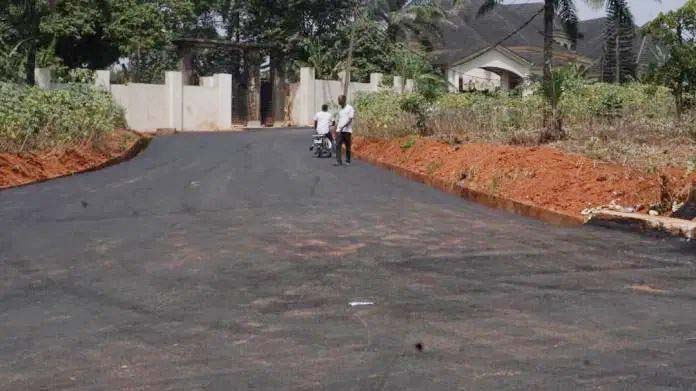
    Dr. Theo Okeke, a philanthropist from Nnewi, has built a one-kilometer road for his people in Umudim Nnewi, Anambra State.

    The road was officially opened on Friday in the presence of the Obis of Umudim, Obi Bennett Okafor, Nnewichi, Obi George Onyekaba, and Uruagu, Obi Afam Obi, who were all representing His Royal Highness, Igwe Kenneth Orizu III.

    Dr Okeke said it was his way of giving back to society during the commissioning of the road, which was tarred on both sides and had drainage systems on both sides.
    Dr. Okeke said he had travelled to many countries and learned that individual contributions to community development could not be overstated because the government could not do it alone.

    He remarked that he had seen similar good things in other places and resolved to provide his people with a good road network, not only for a smooth ride but also to prevent erosion from bad roads.

    He stated that with individual and collective development efforts, the community would be a happy place to live in no time.

    Dr. Okeke also stated that he was contributing to the development of his community in honour of his parents, whom he described as cheerful givers, and that he would always uphold his parents’ legacy.

    “This is my hometown, where I was born and raised.” Through various empowerment programmes, I have been contributing my quota to development and upliftment of my people. I empower widows, and I have a scholarship programme for indigent students, among other things.
    “My own idea of assisting people is to show them how to farm so that they can stand on their own two feet,” Dr. Okeke said.

    Apart from road construction, Dr Okeke said the community was also facing a flood threat, which he said he had resolved, despite the fact that it had increased his initial budget.

    The Dimuzo kindred road, he explained, was in danger of eroding. He stated that he had taken palliative measures and that he would like government officials at all levels to assist the community in achieving a checkmate and developing erosion control measures to complement the efforts already made.

    The philanthropist slammed insecurity in Anambra and Nigeria in general, saying it was unfortunate that it had devolved to this point.

    He expressed optimism that, with the right approach, it could still be overcome.

    “I admire Governor Charles Soludos’ efforts. He is a man of great goodwill who genuinely cares about the State. He went on to say, “I call on all Anambra people to support him.”

    Dr Okeke expressed disappointment that what Ndigbo expected was not what he saw unfolding in the 2023 Igbo presidential bid to produce a successor to President Muhammadu Buhari.

    After many years on the sidelines, he wondered why an Igboman would not be given the chance to rule Nigeria.

    Other attendees included Chief Atuenyi Maduka, the current president-general of Nzuko-Ora Nnewi (Nnewi Town Union); Chief Ugochukwu Udemezue, the immediate past president general; and Elder Soge Egbuna, the Nnewichi president general.

  • Posers as inflation pushes NGX to all time high; fastest growth in the world

    Posers as inflation pushes NGX to all time high; fastest growth in the world

    Despite the country’s dire circumstances, the stock market appears to have recently shown signs of life, with a year-to-date gain of 23.7 percent.

    Despite the fact that this growth appears to defy practical explanation, many reasons have been offered for the market’s current positive outlook.

    Apart from the fact that the market is riding high on the back of relatively strong corporate results at the end of 2021 and the first quarter of 2022, analysts are inclined to believe that the economy’s inflationary spiral is the dramatic magic of the recent bullish market.
    When it comes to analysing the market, there has developed a stoic demeanour. However, the current bullish market experience comes at a time when the Nigerian economy is in dire straits, despite a 3.1 percent growth rate in Q1 2022.

    Food production is expected to decline due to fertiliser shortages due to the Russia/Ukraine war; Nigeria has also not fully recovered from the devastating impact of Covid-19; the growing insecurity that has hampered agricultural activities is taking a different toll on Nigeria’s food security; food inflation, according to NBS, stood at about 17.2 percent; an N6 trillion deficit is tugging at the country’s purse strings. This is despite the fact that headline inflation is still around 16.8%.

    Worse, the country’s total direct remittances fell by $119.4 million (48 percent) to $130.12 million in January 2022 from $249.52 million in December 2021; FG aims to service a total debt stock of about N46.63 trillion with about 95 percent of its revenue. The most serious issue is the country’s political instability.

    This frightening scenario is not conducive to equities market growth, as market participants are prone to being sluggish with their investments. However, in recent years, this has not been the case. Also posing a significant challenge is the country’s new borrowing limit, which has been raised from 25% to 40% of GDP. This was stated in the Medium Term Debt Strategy and continues to perplex many analysts, given that the country’s main source of revenue, crude oil prices, which have risen to $100 per barrel and above, are still fluctuating.

    The World Bank, for one, has expressed concern that many countries will face recession as a result of recent head and tail winds caused by hyperinflation and the Russia/Ukraine conflict, which have harmed supply chains that have yet to recover from the devastating effects of Covid-19.

    Almost everyone nowadays is aware that Nigeria and India are vying for the title of world poverty capital. The naira, which was valued at N220 per dollar on June 15, 2015, has depreciated by nearly 100% to N606 per dollar in June 2022.

    Regardless of these factors, NGX has consistently been one of the best-performing global markets in recent years. For example, the stock market continued to be bullish, gaining 0.34 percent as the All Share Index and market capitalization rose from 52,917.76 points on May 12, 2022 to 53,098.46 points on May 13, 2022. Similarly, the market capitalization increased by 0.34 percent to N28,625 trillion.

    Since the beginning of the year, the stock market has been relatively strong, with the All Share Index and market capitalization reaching new highs. The NGX All-Share Index rose 23.7 percent from 43,026.23 points on January 4, 2022 to 53,201.38 points on May 31, 2022, according to Business Hallmark research.

    While the Nigerian stock market rallied in May 2022, owing to positive investor sentiment in the equities market, with the All-Share index gaining 6.75 percent to close the month at 52,990.23 basis points, up from 49,638.94 points the previous month, analysts believe the Central Bank of Nigeria’s recent raising of Monetary Policy Rates (MPC) rates to 13% may slow down the equities bullish trend.

    “The sharp rise in inflation across both advanced and emerging market economies has raised growing concerns among central banks,” CBN Governor Emefiele said at the MPC’s 285th meeting. “The progressive rise in inflation, driven by rising aggregate demands and wage growth, has put sustainable pressure on price levels,” he added.

    “As a result, major central banks such as the Federal Reserve of the United States, the Bank of England, the European Central Bank, and the Bank of Canada have issued strong guidance of a gradual shift away from monetary policy accommodation to drive market interest rates, which may eventually impact capital flows away from emerging market economies.”

    At a recent virtual session, Parthian Securities’ Head of Investment Research, Oluwaseun Dosunmu, predicted that the stock market would look up in the short to medium term this year.

    “Every pre-election year, investors become wary and cautious about investing in the market,” Dosunmu said. This year, however, things have been moving in the opposite direction, and the market has performed admirably.

    According to critical analysis, the market capitalisation fell -0.91% from N25.543 trillion in January 2022 to N25.311 trillion in February 2022. From February to May 2022, it increased by 12%, and from May to June 10, 2022, it increased by 0.39 percent.
    BH recalls that during the same time period in 2008, the market remained bullish and investors smirked at the banks. The major indicators reached previously unheard-of heights.

    On March 5, 2008, the market capitalization peaked at around $13.1 trillion, and the All Share Index reached a dizzying high of 66,551.84 basis points. The Nigerian Capital Market was thrown into a frenzy as most equities became bullish.

    Traders, civil servants, farmers, and even students invested in the market, making it the toast of the Nigerian business community.

    The Nigerian Stock Exchange (NSE) became a hive of activity, with both investors and speculators scrambling to make a profit, according to many analysts. Some stocks increased by more than 100%, while others increased by 50% or more.

    Mr. Chidi Ajaegbu, former President of ICAN and founder / Chief Executive Officer of Heritage Capital Markets, spoke to Business Hallmark and cautioned investors.

    “Should I therefore advise investors to remain cautious in their investments?” It must be a prudent investment. If you ask me, you should diversify your investments; some of them should be in hard currency, and you should balance and manage your investments so that a shock in one sector does not deplete your net worth.”

  • NNPC generates N1.7trn from crude sales as Lagos leads the country in petrol consumption

    NNPC generates N1.7trn from crude sales as Lagos leads the country in petrol consumption

    The Nigerian National Petroleum Company (NNPC) Limited has raked in about N1.7 trillion from crude oil sales in the last 12 months.

    This is even as Lagos State reportedly consumed about 149.33 million litres of Premium Motor Spirit(PMS) in two weeks, according to data released by NNPC Limited.

    According to the Corporation’s monthly and financial report for August, the sum was earned from March 2020 to March 2021 after it lifted a total of 108 million barrels of crude oil within the year, at an average price of $43 per barrel.

    A breakdown of the report showed that, in March 2020, the oil and gas firm lifted approximately 9, 490mn/b; 11, 437mn/b in April; 5, 113m/b in May; 6,274mb in June; and 8,546m/b in July.

    In August, NNPC said, it lifted 8, 546mn/b; 8, 490mn/b in September; 10, 333mn/b in October; 9, 532mn/d in November; and 7, 539mn/b in December 2020.

    In January 2021, it lifted 5, 542mn/b; 9, 397mn/b in February, and 7, 553mn/b in March 2021, making it a total of 108 million barrels for the period under review.

    According to the NNPC, the crude was removed from the daily allocation for domestic use, resulting in an average daily volume of 243,650 barrels of oil.
    Between March 2020 and December 2020, price changes went from $25/b in March to $17/b in April, $25/b in May, $40/b in June, $44/b in July, $55/b in August, $40/b in September, $40/b in October, $43/b in November, and $51/b in December 2020.

    Crude oil was sold at $57/b in January 2021, $64/b in February, and $64/b in March 2021.

    All barrels were processed under the Direct-Sales-Direct Purchase (DSDP) programme, according to NNPC, in order to meet domestic product supply requirements. No barrels were delivered to domestic refineries for processing.

    During this time, the official exchange rate of the country was around N400 to the dollar.

    NNPC said it earned approximately N71 billion in March, N69 billion in April, N46 billion in May, N90 billion in June, N136 billion in July, N170 billion in August, N130 billion in September, N158 billion in October, N156 billion in November, and N145 billion in December 2020, based on an average of N400 per dollar, various average monthly Brent costs, and monthly crude oil production figures as stated above.

    In January 2021, the NNPC earned N124 billion, N230 billion in February, and N184 billion in March 2021.

    Within the review period, NNPC Limited reported total revenue from sales of N1.7 trillion.

    Meanwhile, the company announced that between May 16 and May 29, 2022, it distributed 966.58 million litres of gasoline across the country.

    According to data, the states of Lagos, Kano, and Niger received the most funding.

    According to the distribution details, 13 states with high demand received 72 percent of the products delivered, 11 medium demand states received 21% of the product allocation, and 12 states with low demand received the remaining 7% of the PMS allocation.

    With 149.33 million litres of PMS distributed, Lagos State, Nigeria’s commercial centre and the continent’s fifth largest economy, received the highest volume of PMS.

    Lagos received 149.33 million litres, accounting for around 15.5 percent of the NNPC’s overall distribution to the federation.

    Kano came in second with 86.19 million litres, followed by Niger, Oyo, Ogun, Delta, Zamfara, Edo, Adamawa, Kwara, Rivers, Kaduna, and Enugu, who were given 73.91 million, 59.05 million, 51.76 million, 45.86 million, 42.12 million, 34.66 million, 34.28 million, 31.25 million, 31.25 million, 26.07 million, and

    Ondo received the least amount of PMS from the NNPC, with 9.6 million litres, followed by Kebbi (8.04 million), Kogi (7.74 million litres), Taraba (7.25 million), Bayelsa (6.2 million), and Nasarawa (5.54 million).

    Yobe received 4.9 million litres, Ebonyi (4.9 million), Katsina (4.59 million), Ekiti (4.4 million), Sokoto (4.16 million), Bauchi (2.48 million), and Jigawa (1.1 million) received low volumes due to their usage patterns.

  • Business leaders advise youths, govt on nation building

    Business leaders advise youths, govt on nation building

    A network of young business leaders and aspiring entrepreneurs in Africa, Under 40 CEOs, has tasked Nigerian youths to play a more active role in politics and governance in order to address the country’s development challenges.

    The group also called on the government to integrate more brilliant young people into key leadership positions at national and state levels for inclusive and sustainable economic growth.

    Speaking recently at a forum organised by the group themed, Dinner with Needle Movers, Founder and Executive Director—Africa, Familusi Babajide, was quoted in a statement as saying, “By current estimates, up to 70 per cent of sub-Saharan Africa’s population is under the age of 30, representing about 806 million of the 1.151 billion people in this region. This demographic projection has significant implications for economic activity, public service provision, and state stability.”

    “As the group with the most at stake, young African leaders deserve to be part of the policy discussions that seek to find solutions to the challenges confronting the continent. More qualified youths must be drafted into leadership positions in presidencies and state governments, parliaments, corporate boardrooms, as well as civil society and faith-based organizations to assist in conceptualizing and driving critical development initiatives.”

    In his remark, the guest speaker at the event and oil business mogul, Tonye Cole, noted that the lack of visionary leadership and accountability remain the biggest challenges to development in Nigeria and, indeed, all of Africa.

    Read Also:  Buhari writes APC governors, seeks support for Tinubu

    He also stressed that active youth participation in politics is critical to the continent’s development.

    He said, “The truth is that African leaders have not always responded effectively to the needs of the continent and the respective countries. But there is hope in the rising generation of young people who can play a critical role in building accountability for successful economic transformation, representation, and public service. The urgency of these efforts cannot be overemphasized, as the youths have the most to lose if solutions are not enacted.”
    He added, “If we succeed in what we’re doing, the price of success far outweighs the cost of failure. The price of success is building an economy that will move our youths from the streets to express their talents and their gifts. Oftentimes, a lot of us get frustrated by the system and just want to pack up and go.”

    But Nigeria isn’t a lost cause. What we need are more young people with the audacity to stay and make a difference. Please don’t give up; you are the drivers of a new Nigeria.”

  • FG plans to eliminate multiple taxes in transportation sector

    FG plans to eliminate multiple taxes in transportation sector

    According to Dr. Magdalene Ajani, Permanent Secretary of the Federal Ministry of Transportation, the Federal Government is finalising plans to eliminate multiple taxes in the transportation sector in order to reduce the cost of doing business in the country.

    On Wednesday, Ajani made the announcement at the National Transportation Technology Conference and Exhibition (NTTCE), a two-day conference and exhibition in Lagos.

    The theme of the conference, according to the News Agency of Nigeria (NAN), is: Intergovernmental cooperation between federal and sub-national governments in seamless policy, regulation, and tax regimes: The role of the natural gas expansion programme.

    Ajani stated that streamlining the various taxation in the sector was necessary to boost growth and development.

    She claimed that multiple taxation was detrimental to business development and sustainability.

    Read Also:  COVID-19 Still a myth to many Nigerians, according to poll

    According to the permanent secretary, one of the issues affecting the sector is unregulated taxation, which has impacted the cost of doing business in the country.

    She stated that the law governing the country’s transportation sector accommodated the roles of the federal, state, and local governments.

    Ajani stated that the type of segment to cover, such as motor parks and licences for both divers and vehicles, was left up to a specific level of government.

    “What we discover is that multiple road stickers are being sold to road users by different groups of people.”

    ” As a result, this tends to raise the cost of doing business in road transportation and must be regulated.”

    “Those claiming that the Federal Ministry of Transportation gave them permission to collect money on its behalf are incorrect,” Ajani said.

    Dr Frederic Oladeinde, the Lagos State Commissioner for Transportation, also spoke and praised the Federal Government’s efforts to address multiple taxation issues in the sector.

    According to Oladeinde, the development will benefit state governments’ transportation policies.

    He stated that technology was the way forward in driving the sector to become more efficient and effective.

    “We have deployed a lot of technology in Lagos; we’re talking about the Cowry cards to integrate the mode of transportation.”

    “We’re looking into integrating the mode of transportation’s timetable to reduce waiting time,” he said.

    The Lagos State Sector Commander of the Federal Road Safety Corps, Corp Commander Olusegun Ogungbemide, stated that the corps has been using technology to improve its mode of operation.

    He stated that technology had aided in reducing response time to crash scenes and electronic ticketing in the issuance of traffic tickets.

    Ogungbemide stated that the corps would continue to ensure that our roads are safe and free of accidents.

    Mrs Chinwe Uwaegbute, Secretary of the Nigeria Transportation Commissioners’ Forum, stated that the conference brought together all of the key stakeholders in the transportation sector to develop policy to propel the industry forward.

    “The conference raised many issues, such as the challenges of double taxation, the need for interconnectivity for all modes of transportation for ease of doing business,” she said.

    “The outcome of this conference will chart a course for better growth and development of this sector.”

    “The Federal Ministry of Transportation is also participating in this conference, and we hope that the points raised here will be used to generate policies that will aid growth in the sector.”

  • Nigeria’s Debt With China Hits $3.67bn As Imports Rise By 183.91%

    Nigeria’s Debt With China Hits $3.67bn As Imports Rise By 183.91%

    So far, Nigeria’s borrowing from China has totaled 89.94%, or $3.67 billion.
    China has been reported to be Nigeria’s largest bilateral lender due to collaborations with the country over the years.

    According to a recent Debt Management Office report, approximately $3.12 billion in Chinese loans are project-tied and include 11 projects such as the Nigerian Railway Corporation’s modernization project, the Abuja Light Rail project, four Nigerian airport terminal expansion projects (Abuja, Kano, Lagos, and Port Harcourt), and others.

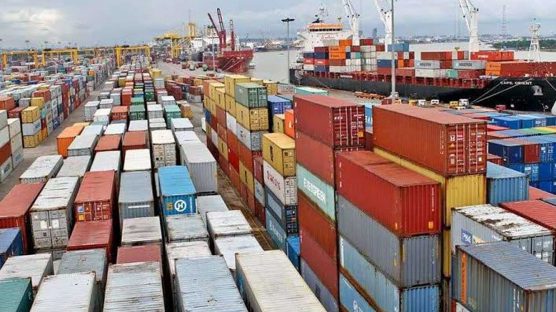
    Meanwhile, data from the National Bureau of Statistics on foreign trade show that China accounts for the majority of imports into Nigeria.
    According to the data, Nigeria’s imports from China increased by 183.91 percent from N530.98 billion in the first quarter of 2018 to N1.51 trillion in the first quarter of 2022.

    According to this statistic, China ranked first among the top ten countries in the five quarters under consideration. While China accounts for the majority of the country’s imports, exports to China are negligible, according to available data.

    In the first quarters of 2018, 2020, and 2022, the country was not among the top ten export destinations. Only in the first quarter of 2021 did China rank among the top ten export destinations, coming in third with N190.11 billion. Total imports from China were estimated to be N2.01 trillion in the same quarter.

    Imports from China increased in all three quarters under consideration. It was N530.98 billion in Q1 2018, N979.29 billion in Q1 2019, and N1.11 trillion in Q1 2020.

    It peaked at N2.01 trillion in Q1 2021 and fell to N1.51 trillion in Q1 2022.

    Motorcycles, machines for the option of voice, electrical apparatus for line telephony or line telegraphy, mackerel, parts of machinery for working on rubber or plastics, crude salt, compressed salt used in animal feeding, antibiotics, herbicides, and other items are said to be imported from China.

    Meanwhile, polyethylene, leather, sesamum seeds, cashew nuts, zinc ores and concentrates, lead ores and concentrates, and other products were exported to China during the period under review.

    According to the NBS, imports to China in Q1 2022 account for 25.55 percent of total imports (N5.90tn).

    It accounted for 29.34% of total imports in the first quarter of 2021. (N6.85tn). It was 26.28 percent of total imports (N4.22 trillion) in Q1 2020, 26.4 percent of total imports (N3.70 trillion) in Q1 2019, and 21.1 percent of total imports (N2.52 trillion) in Q1 2018.

    According to the Chairman of the Manufacturers Association of Nigeria’s Export Group/Vice Chairman of Sapele Integrated Industries Limited. There is no requirement for nations to have equal imports and exports, Mr Ede Dafinone.

    “There is no guarantee or requirement that any country import and export the same volume from each other,” he said.

    “If Nigeria exports a certain amount of goods and services while importing another amount of goods and services from another country, the question is what the next difference with net import and export is.” There is no requirement as to which country is to blame. It makes no difference where the deficit is located as long as there is an overall surplus.”

  • Makinde Inspects LG, Pension Board Complex, Expresses Sadness At Pace Of Work

    Makinde Inspects LG, Pension Board Complex, Expresses Sadness At Pace Of Work

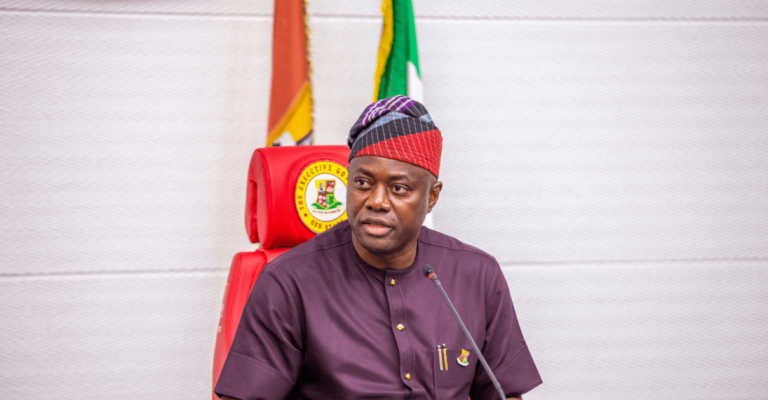
    On Tuesday, Oyo State Governor ‘Seyi Makinde inspected the ongoing Oyo State Local Government Service Commission and Local Government Staff Pension Board secretariat complex at the State Secretariat in Agodi, Ibadan.

    He expressed dissatisfaction with the contractors’ slow pace of work and gave the contractor a three-month deadline to complete the project.

    The governor, who led some government officials to the project site behind the Water Corpo­ration Building, Secre­tariat, Ibadan, said that while the quality of the work is good, it is unacceptable that a project that was supposed to be completed in 10 months cannot be completed in two years.
    According to a statement issued by the governor’s Chief Press Secretary, Mr. Taiwo Adisa, Governor Makinde has approved the payment of the additional N150 million requested by the contractor after he provided a performance bond.

    Speaking to reporters at the project site, the governor explained that he has asked the commission to release funds for the project’s quick completion, and that the project is expected to be completed within the next three months, according to the contractor’s new timeline.

    In response to claims that the project was hampered by inflationary economic trends, Makinde stated that while his administration does not want contractors to do business with the state and go bankrupt, the state will not be ripped off.

    Read Also: Breaking: 2023: Amosun Steps Down For Bola Tinubu

    “On this project’s assessment, the quality is not bad, but for a project scheduled to be completed in 10 months and this is two years later, it is not acceptable to us,” he said.

    “I asked them to release some more money to the contractor, and he promised me that the project would be completed in three months – the hall in one month, and the main office in two months after that.” So, by the end of September, we should have workers from the Local Government Service Commission occupying this space.”