Category: Business

  • NADDC Woos Spanish Investors To Nigeria

    NADDC Woos Spanish Investors To Nigeria

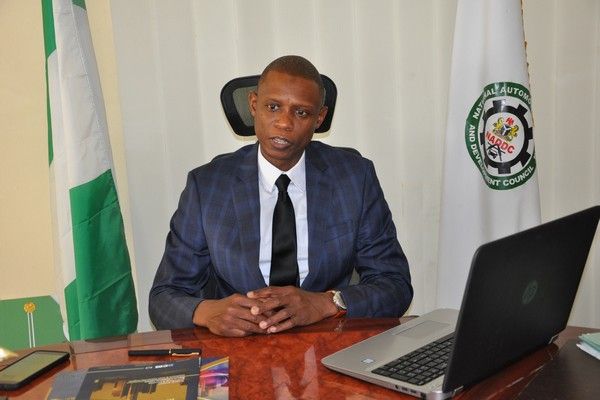
    Jelani Aliyu, the director general of the National Automotive Design and Development Council (NADDC), has urged Spanish companies to invest in vehicle production in Nigeria.
    The DG gave the advice as a panellist at the Nigeria-Spanish Business and Trade Forum in Madrid, Spain, where President Muhammadu Buhari delivered the keynote address.

    “Vehicles can be produced in Nigeria both for local markets and exports, leveraging on the Africa Continental Free Trade Area,” Aliyu said, highlighting the vast opportunities in the Nigerian automotive industry (AfCFTA).

    Read Also:  Breaking: Unknown gunmen kidnap mother of APC senatorial candidate

    “Nigeria is ready for innovation and advanced automotive solutions, products, and services, and Spanish companies could really add significant value to the automotive space in Nigeria.”

    “We are looking forward to further in-depth discussions with interested companies on how they can come in to be a part of this incredible journey that we have started in Nigeria, particularly in vehicle electrification,” he added.

    The NADDC’s director general had previously participated as a Panelist Speaker at the Electric Vehicle Innovation Summit, EVIS, in Abu Dhabi, United Arab Emirates, from the 23rd to the 25th of May 2022.

    The summit brought together researchers, engineers, government officials, and electric vehicle-related companies and institutions from around the world to explore and discuss technical, policy, market, achievements, and potentials in electric mobility.
    The DG discussed Nigeria’s current achievements in electric mobility as well as the sector’s strong potential in Nigeria and Africa.

    Read Also:  Owo attack: APC’s silence confirms its complicity – PDP insists

    He also met with a delegation from a company that manufactures solar-powered agricultural tractors, with the goal of collaborating with the company in the local production of the tractors and making them available to Nigerian farmers.

  • Nasarawa State Gets Telecom Consumer Sensitization From The NCC

    Nasarawa State Gets Telecom Consumer Sensitization From The NCC

    The Nigerian Communications Commission (NCC) has taken its consumer enlightenment programme to communities in Nasarawa State to sensitise them about their rights, obligations, and privileges as part of its commitment to enlighten telecom service consumers.
    Furthermore, the engagement was organised to inform telecom consumers about the Commission’s consumer-centric initiatives, which consumers can use to improve their telecom usage experience.

    Amina Shehu, the NCC’s Director, Zonal Operations, said at the event, which took place recently in Keffi, Nassarawa State, that the engagement was in line with the NCC’s mandate to constantly educate consumers on telecom service-related issues bordering on improving their quality of service experience.

    Read Also:  NNPP Holds Senatorial Primaries In Lagos

    Usman Abubakar, an Assistant Director in the department, addressed the participants on behalf of Shehu, saying the Commission had developed a series of engagement programmes to keep telecom consumers informed of developments in the telecoms sector in order to protect consumers from any unwholesome practises.

    Thus, participants in the sensitization programme were educated on a variety of topics, including Subscriber Identity Module (SIM) registration, the redress process for consumer complaints arising from illegal deductions, and the illegal sale of improperly-registered cards, among others.
    According to Abubakar, the Commission recently directed all subscribers to ensure that their SIM cards are linked to their National Identification Numbers (NIN), or their mobile lines will be disconnected.

    “As a general rule in the Nigerian telecommunications industry today, every mobile subscriber must register his/her SIM card before activation, as there are penalties for the sale and purchase of fraudulently-registered SIM cards.” “We also urge you, as telecom customers, not to allow another person to use your NIN to register other people’s SIM cards,” he said.
    Concerning complaint resolution, Abubakar told consumers that it is their right to be satisfactorily attended to by their service providers in order to resolve any service-related complaints they may have. He did, however, mention that if such a complaint was not satisfactorily resolved by their mobile network operator (MNO), consumers should use the NCC toll-free number 622 to report such a case for necessary escalation and resolution.

    Abubakar also stated that the Commission’s Do-Not-Disturb (DND) 2442 short code, which consumers can use to manage cases of unsolicited messages on their mobile phones, is another consumer-centric initiative. “Millions of telecom consumers have used this short code to stop or manage spam text message cases on their mobile devices, and we encourage you to do the same,” he added.

    Read Also:  Breaking: Workers block NASS gate over minimum wage, others join them

    During the event, the NCC team addressed a number of consumer complaints by obtaining the necessary information from the Commission, while others were advised to contact their service providers to resolve specific service-related issues. Some of the issues include automatic switching from one data plan to another without the consumer’s consent, as well as illegal airtime or data deductions.

  • FEC approves NNPC, ECOWAS deal on Nigeria-Morocco gas pipeline

    FEC approves NNPC, ECOWAS deal on Nigeria-Morocco gas pipeline

    The NNPC’s agreement with ECOWAS for the construction of the Nigeria-Morocco Gas Pipeline has been approved by the Federal Executive Council (FEC).

    Timipre Sylva, Minister of State for Petroleum Resources, briefed State House reporters following the FEC meeting at the Presidential Villa in Abuja, which was presided over by Vice President Yemi Osinbajo on Wednesday.

    The project is still in the front end engineering design phase, according to Sylva, after which the cost will be determined.

    Read Also:  Two notorious bandits, 15 others killed in Zamfara

    The pipeline would connect Morocco and Spain via 15 West African countries.

    “Council received three memos from the Ministry of Petroleum Resources.

    “In the first memo, Council authorised NNPC Ltd to sign a Memorandum of Understanding (MOU) with ECOWAS for the construction of the Nigeria-Morocco Gas Pipeline.

    “This gas pipeline will transport gas to 15 West African countries as well as Morocco, and from Morocco to Spain and Europe,” he explained.

    The council also approved a N3.8 billion project for the Nigeria oil and gas park in Ogbia, Bayelsa, to build a switchgear room and install power distribution cables and equipment.

    According to him, the park’s purpose is to support local oil and gas component manufacturing.

  • Telcos blame govs, others as ICT’s GDP contribution tumbles

    Telcos blame govs, others as ICT’s GDP contribution tumbles

    The Information and Communication sector’s contribution to GDP fell by 9% in the first quarter of 2022, from N3.1tn in the fourth quarter of 2021 to N2.81tn.

    The ICT sector contributed 15.21% and 16.20% of real GDP in Q4 2021 and Q1 2022, respectively, according to GDP figures released by the National Bureau of Statistics.

    Total real GDP in Q4 2021 was N20.33 trillion, and in Q1 2022, it was N17.35 trillion. Telecommunications and information services, publishing, motion picture, sound recording, and music production, and broadcasting are all included in the sector, according to the statistics body.

    Read Also:  Peter Umeadi emerges victorious in the APGA Presidential Primaries

    Telecommunication and information services contributed 79.88% (N2.25 trillion) of the sector’s total GDP contribution in Q1 2022 and 82.89 percent (N2.56 trillion) in Q4 2021.

    “Quarter-on-Quarter, the sector exhibited a growth of -9.09 percent in real terms,” said the NBS of the sector’s contribution to real GDP in Q1 2022. In the first quarter of 2022, the sector contributed 16.20% of total real GDP, up from 14.91% the previous year and 15.21% the previous quarter.”

    “In the fourth quarter of 2021, the sector contributed 15.21% of total real GDP, higher than the same quarter the previous year, when it contributed 15.06 percent, and higher than the preceding quarter, when it contributed 14.20 percent,” it said.

    The Information and Communications sector contributed 10.55 percent of total nominal GDP in Q1 2022 and 9.88 percent in Q4 2021 during the time period under consideration.
    In the fourth quarter of 2021, total nominal GDP was N49.28 trillion, while in the first quarter of 2022, it was N45.32 trillion. From N4.87 trillion in Q4 2021 to N4.78 trillion in Q1 2022, the sector’s contribution to nominal GDP fell by 1.80%.

    Read Also:  Abducted corps member freed after N2m, five phones, N100,000 recharge card ransom

    Revenue from telephone, telex, facsimile, telegraph, and other income from satellite and internet services generate gross output for the telecommunication and information services subsector, according to the NBS.

  • Navy Recovers N15bn Worth Of Petroleum Products In Niger Delta

    Navy Recovers N15bn Worth Of Petroleum Products In Niger Delta

    In the last seven weeks, the Nigerian Navy said it has recovered stolen petroleum products worth N15 billion and deactivated 172 illegal refining sites in the Niger Delta region.

    According to the navy, about 45 suspects have been arrested in connection with the oil theft, which was recorded by the ongoing operation ‘Dakatar Da Barawo,’ which began on April 1, 2022, in collaboration with the Nigerian National Petroleum Corporation (NNPC).

    Saidu Garba (rear admiral), the Nigerian Navy’s chief of policy and plans, said there has been a decrease in reported cases of piracy and sea robbery within Nigeria’s maritime domain.
    According to him, this is one of the reasons why the International Maritime Bureau removed Nigeria from the piracy list (IMB).

    Read Also:  Crisis Erupts in Osun APC, Aspirants Call for Cancellation of Primaries

    “The criteria for removing Nigeria from the list of countries prone to piracy are that we have not experienced piracy in a given period of time or that the number is “negligible.”

    “We’ve only had two failed attempts at piracy in the last year.” The lowest number of piracy and sea robbery against ships in our waters in 27 years, according to the IMB Global Piracy Report released on July 14, 2021.

    “I am pleased to inform you that Nigeria has been removed from the IMB’s Piracy List as of March 3, 2022, according to the most recent IMB report.

    Nigeria is no longer on the list of countries prone to piracy. The implications for the shipping industry, general maritime commerce, and the national economy are enormous and positive,” he added.
    “However, the Nigerian Navy is not resting on its laurels; we are going all out to ensure that piracy does not strike not only Nigeria, but the entire Gulf of Guinea,” Garba added.

    He went on to say that the navy has made significant progress, particularly in the areas of fleet recapitalization and operational activities, and that the navy’s continued fleet recapitalization is a top priority.

    Garba stated that the navy has acquired several capital ships, fast-moving patrol boats, and inshore patrol craft, as well as air assets and Seaward Defence Boats built in-house (SDB).

    He also stated that the Navy Ship Kada would be arriving in the country shortly.

    Read Also:  Nigerian Customs modernization project to gulp $3.2bn – Chairman

    “Furthermore, the NN recently signed a contract with Turkey’s DEARSAN Shipyard for the construction of two 76-meter high-end offshore patrol vessels” (OPVs).

    “The navy is also receiving Unmanned Aerial Vehicles (UAVs) to improve our Maritime Surveillance/Domain Awareness assets, including our NN response capability.” It’s worth noting that work on SDB IV and V has begun at Naval Dockyard Limited in Lagos,” he added.

  • Nigerian Customs modernization project to gulp $3.2bn – Chairman

    Nigerian Customs modernization project to gulp $3.2bn – Chairman

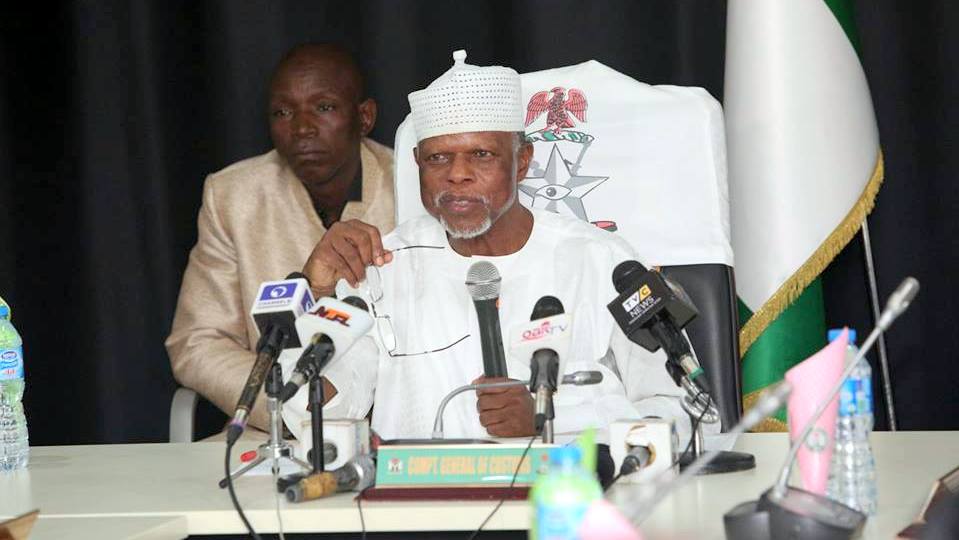
    The modernisation of customs services project, according to Saleh Ahmadu, Chairman of Trade Modernisation Project Limited (TMPL), is expected to bring in 176 billion dollars for Nigeria.

    Mr Ahmadu made the remarks at a press conference in Abuja on Monday, shortly after signing a concession agreement for the modernization of the Nigeria Customs Service.

    Through multi-stakeholder collaboration, the 3.2 billion dollar investment project aims to make exports and imports easier, resulting in increased foreign exchange earnings for the country.
    The Infrastructure Concession Regulatory Commission, or ICRC, steered the concession agreement through the Public Private Partnership framework.

    Read Also:  Wike: The real hero of the moment

    “As the concession period gets underway, we want to reassure Nigerians that the Federal Government’s revenue target of 176 billion dollars will be met, if not exceeded.”

    More importantly, we are optimistic about the country’s real economic benefits, particularly in terms of export and import-dependent business growth.
    “Others include better global supply chains, increased industrial capacity utilisation, and job creation,” Ahmadu said.

    Ahmadu said that because the project is technology-driven, the Nigeria Customs Service’s business processes will be more efficient.

    Similarly, TMPL’s Managing Director, Dr Jummal Umar-Ajijola, stated that the Service Modernisation Project concession agreement demonstrated the Federal Government’s commitment to trade’s role in national development.

    “Today, Nigeria takes a giant step forward in its preparation for global trade in the twenty-first century.

    “Agile national responses are required to meet the rapidly changing human development needs and challenges posed by globalisation.”

    This modernization encompasses the customs service’s entire end-to-end operations, resulting in a value chain that facilitates trade not only in Nigeria but across the continent.

    “For us at Trade Modernisation, the 22nd century has just begun in Nigeria, and the rest of the world must now follow us in taking this leap.”

    “We’re going to put 3.2 billion dollars into this project as an initial investment.”

    “The World Customs Organization is ecstatic about what this means because if you have the Nigerian market, you have the African market, and if you have the African market, you have the global market,” says the statement.

    “Africa has a population of over 1.5 billion people, and we’re hoping to capture that number in terms of trade.”

    “It simply means that the import and export processes will be made seamless, that there will be accountability, that leakages will be blocked, and that the government will be able to collect more revenue,” she explained.

    Read Also:  Breaking: Alleged N2.9bn Fraud: The Court Grants Okorocha N500m Bail

    Mr. Umar-Ajijola went on to say that the project would increase job opportunities, particularly for young people.

    “A lot of new professions would be created, and young people would have jobs because they are the ones who drive technology.”

    “This ecosystem would ensure job creation for the country, which would, in turn, lead to long-term development,” she explained.

  • Tobacco farmers will be assisted in switching to alternative crops by WHO

    Tobacco farmers will be assisted in switching to alternative crops by WHO

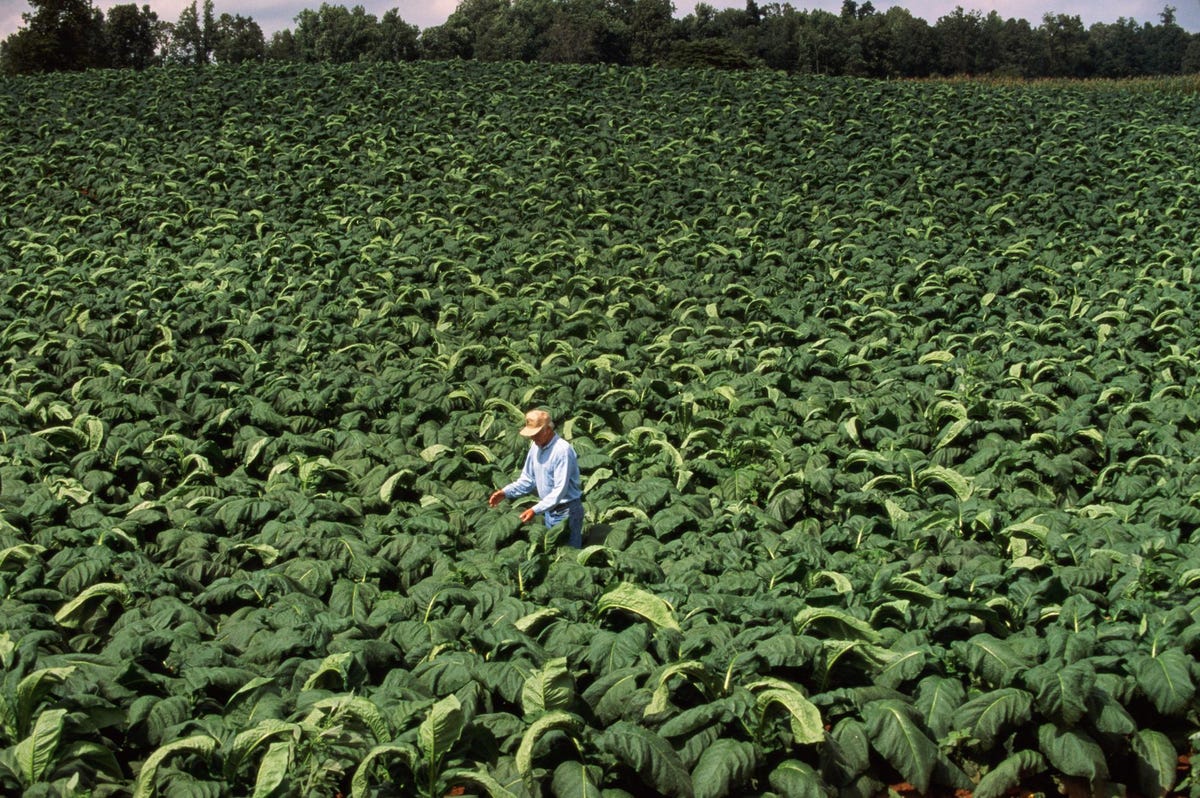
    The World Health Organization (WHO) has stated that it is committed to assisting tobacco farmers in Africa in transitioning to other crops.

    Dr Matshidiso Moeti, WHO Regional Director for Africa, advised African countries to impose environmental taxes on tobacco across the value and supply chains, including production, processing, distribution, sales, consumption, and waste management, in a statement commemorating World No Tobacco Day.

    “I also encourage our countries to speed up their implementation of the WHO Framework Convention on Tobacco Control (WHO FCTC), which provides the necessary guidance for advancing the creation of smoke-free environments, developing programmes to help tobacco users quit, and supporting the use of excise taxes and other financial countermeasures.

    Read Also:  Breaking: Alleged N2.9bn Fraud: The Court Grants Okorocha N500m Bail

    “Reducing tobacco consumption is a critical step toward achieving the health-related Sustainable Development Goals (SDGs), but the benefits go far beyond health,” Moeti said.

    While acknowledging that tobacco farming poses health risks to farmers, the WHO expressed regret that “tobacco growing is a significant driver of deforestation as well, due to the large quantities of wood required for curing.”

    “In turn, deforestation contributes significantly to carbon dioxide emissions and climate change, as well as biodiversity loss, land degradation, and desertification.”

    “It is estimated that the need for wood to cure tobacco accounts for 12% of all deforestation in Southern Africa.

    “Tobacco farming also exposes farmers to a variety of health risks, including “green tobacco sickness,” which is caused by nicotine absorbed through the skin while handling wet tobacco leaves, as well as pesticides and tobacco dust exposure.”

    Cigarette butts are the single largest category of litter, according to the statement, “with research showing that cellulose acetate-based cigarette filters are largely non-biodegradable.”

    “Cigarette butts litter streets, parks, and beaches, eventually making their way into waterways and leaching harmful chemicals that poison animals, aquatic life, and children.”

    Despite 24 African countries prohibiting smoking in public places and 35 prohibiting tobacco advertising, promotion, and sponsorship, “our estimates are that one in every ten African adolescents uses tobacco,” according to the WHO.

    “The emergence of new products, such as electronic nicotine and tobacco products, are also proving appealing to youths, adding to the concerns.”

    “The environmental impacts of tobacco farming include massive use of water, which is a scarce resource across most of the continent, along with large-scale deforestation and contamination of our air and water systems,” the WHO Chief said.

    “Tobacco-growing land could be put to much better use, especially in countries where food insecurity is a problem.

    Read Also:  Lagos continues crackdown, demolishes seven buildings in Mushin

    “To help combat the threat, WHO has partnered with the United Nations Food and Agriculture Organization (FAO) and the Kenyan government to launch the Tobacco-Free Farms project.

    “The project, which began in March, assists farms in transitioning from tobacco to alternative food crops that will help feed communities rather than harm their health. Through the World Food Programme’s local procurement initiatives, UN agencies and the Kenyan government provide training, inputs like seeds and fertiliser, and a ready market for their harvest.”

  • Lagos continues crackdown, demolishes seven buildings in Mushin

    Lagos continues crackdown, demolishes seven buildings in Mushin

    The Lagos State Building Control Agency has demolished a total of seven structures in Mushin.

    The buildings were demolished, according to LASBCA, to avoid imminent collapse, which would have resulted in the deaths of several innocent people and the destruction of property worth millions of dollars.

    The seven distressed buildings on Abiodun Wright Street, Itire Road, and Gbadamosi Iginla Street in Mushin were demolished by LASBCA officials as a proactive measure to save residents, according to the statement.

    Read Also:  How Primate Ayodele warned Wike not to waste his money during his presidency in 2023

    The General Manager of LASBCA, Arc. Gbolahan Oki, lamented the level of disregard for vacation notices issued by the agency on various occasions to occupants of the distressed buildings and others in various parts of the state during the demolition of the distressed buildings on Thursday.

    “The Governor Babajide Olusola Sanwo-Olu administration frowns on the avoidable loss of lives and property of residents of the State,” he said. It is past time for Lagosians to prioritise their safety and avoid blaming the government at all costs.”

    On behalf of the general manager, Engr. Khadijah Olayemi Aremo-Ajibade, Director and Head of Inspectorate, Quality Control and Post-Construction Audit, stated that the seven buildings demolished by the agency had been served with necessary notices, but the occupants and owners of the structures had failed to comply.

    While noting that over ten distressed buildings had been demolished since the exercise began earlier this year, the general manager stressed that the exercise was intended to prevent further deaths, warning that all distressed buildings in any part of the state were disasters waiting to happen.

    Arc. Oki reassured Lagosians that the agency would continue to work tirelessly to achieve its vision and goal of ensuring that all structures in the state were safe to live in and did not pose a threat to other nearby structures.

    Read Also:  Kidnappers demand N100m for Methodist Prelate Kanu-Uche, 2 others

    He expressed the hope that Lagosians would develop the habit of vacating distressed buildings before they were designated for demolition by the Lagos State Building Control Agency or other relevant government agencies.
    demolition.

  • Nigerian food prices have increased in the last 12 months – NBS

    Nigerian food prices have increased in the last 12 months – NBS

    According to the National Bureau of Statistics, the cost of certain foodstuffs has risen in the last year.

    The NBS Selected Food Price Watch Report for April 2022, released on Thursday in Abuja, confirms this.

    The average price of 1kg of Beans (white, black eye, sold loose) increased by 44.32 percent year over year, from N359.64 in April 2021 to N519.05 in April 2022, according to the report.
    In March 2022, this increased by 2.59 percent on a month-over-month basis, to N505.94.

    The average price of sliced 500g bread increased by 35.31 percent year over year, from N332.95 in April 2021 to N450.51 in April 2022, according to the report.

    Read Also:  Unknown Gunmen invade Kukah’s church, kidnap priests, others

    “The average price of this item increased 0.61 percent month over month in April 2022.”
    Similarly, the average price of a kilogramme of yam tuber increased 42.88 percent year over year, according to the report.

    In April 2021, the value was N252.80, and in April 2022, the value was N361.20.

    It said it increased by 2.16 percent month over month, from N353.56 in March 2022 to N361.20 in April 2022.
    Similarly, the average price of Palm oil (1 bottle) increased by 45.59 percent from N578.86 in April 2021 to N842.75 in April 2022, according to the report. On a month-over-month basis, it grew by 0.06 percent.

    According to the report, the average price of 1kg unripe Plantain increased by 38.66% year over year, from N243.37 in April 2021 to N337.47 in April 2022.
    The average price of groundnut oil (1 bottle) in April 2022 was N1, 007.68, up 46.21 percent from N689.19 in April 2021, according to the report.
    “From N994.62 in March 2022, it increased by 1.31 percent month over month.”

    Ebonyi had the highest average price of Beans (white, black eye, sold loose) at N875.71, while Borno had the lowest at N256.67, according to the report.

    Read Also:  Late Abacha’s son, Muhammad, wins parallel Kano PDP guber primary

    According to the report, Ebonyi had the highest average price of bread sliced at 500g, at N650.0, while Borno had the lowest, at N261.38.
    The highest price for a kilogramme of yam tuber was N695.93 in Akwa-Ibom, while the lowest was N133.28 in Bauchi, according to the report.
    According to the report, the South-East had the highest average price of brown beans sold loose (N831.09), followed by the South-South (N676.13), and the North-East had the lowest (N307.21).

    “Similarly, the South-East had the highest average price of sliced 500g bread, at N601.09, followed by the South-South at N550.21, and the North-East had the lowest, at N278.51.”

    According to the report, the average price of 1 kilogramme of yam tuber was higher in the South-West and South-South, at N528.78 and N495.02, respectively, while the lowest was in the North-East, at N142.79.

  • Police demands to arrest those spreading false information about Emefiele’s dismissal

    Police demands to arrest those spreading false information about Emefiele’s dismissal

    …lauds Emefiele’s accomplishments

    …demands that those spreading false information about Emefiele’s dismissal be arrested by the police.

    On Thursday, the South West Professional Forum, SWPF, applauded the Central Bank of Nigeria’s (CBN) decision to raise the Monetary Policy Rate (MPR) to 13% after two years.

    At a press conference in Abuja, SWPF made the commendation in an address signed by Comrade Gbenga Ganzallo, Secretary, OYPF, Chief Bolanle Akinwummi, and Public Relations Officer, SWPF, Olakunle kolawole Ebenezer Esq.

    The Forum stated that CBN Governor Godwin Emefiele is a visionary and a core professional who has been patriotic in handling the economy’s affairs with his team of seasoned professionals, and that the increase in the MPR to 13% after two years was a step in the right direction to ensure the economy’s sustainability in the face of daunting global and local challenges.

    “The Governor of the Central Bank of Nigeria, Mr Godwin Emefiele, is a patriotic Nigerian and a true professional who has used his vast experience to keep the economy afloat despite global and local challenges,” the group said.

    We applaud Emefiele and his seasoned team of professionals at the Central Bank of Nigeria’s (CBN) Monetary Policy Committee (MPC) for unanimously voting to raise the Monetary Policy Rate (MPR) to 13% on Tuesday, which is a critical decision for the country’s future.

    Read Also: Breaking: FIB arrests popular broadcaster

    “We support the new MPR of 13% because it will further consolidate other CBN policies that will strengthen the economy, thus serving as a baseline interest rate in an economy on which other interest rates are built.”

    “And, as the CBN chairman correctly stated, “the sharp rise in inflation across both advanced and emerging market economies has generated growing concerns among central banks as the gradual rise in inflation, driven by rising aggregate demand and wage growth, has put sustainable pressure on price levels.”

    “We agree with him, as he also explained that as a result, major central banks such as the Federal Reserve of the United States, the Bank of England, the European Central Bank, and the Bank of Canada have provided strong guidance of a gradual shift away from monetary policy accommodation to drive market interest rates, which may eventually impact capital flows away from emerging market economies.”

    “On this, we support his decision because it will increase the economy’s value and allow businesses to thrive, as well as attract investors from all sectors of the economy.”

    The group also urged Nigerians to rally behind the CBN Governor and work together with him to build a strong economy and a favorable business environment for both Nigerian and foreign businesses.

    Meanwhile, the group highlighted some of the CBN Governor’s key accomplishments since taking office, pointing out that despite the country’s dire financial situation, he introduced several policies to help the poor, including the farmer’s Anchor Borrower Program, which just saw the first of its kind rice pyramid a few months ago.

    “On June 3, 2014, when Godwin Emefiele became the 10th indigenous Governor of the Central Bank of Nigeria, he promised to build a resilient financial system capable of serving the Nigerian economy’s growth and development needs.

    “Today, even the blind, deaf, and dump can attest to the fact that the Apex Bank’s policies and programs are designed in such a way that jobs are created and inclusive growth is facilitated.”

    “In addition, there are key macroeconomic concerns in the country, such as inflation and exchange rate stability.

    “Despite the country’s dire financial situation, he was able to mobilize the private sector and salvage the situation, and he also introduced several policies to help the poor, such as the farmer’s Anchor Borrower Program, which just saw the first of its kind rice pyramid a few months ago.”

    “Nigerians have been offered numerous interventions and support for Small Medium Enterprises, SMEs, and others through his people-centered policies.”

    “And this has created a support base for local companies to be competitive, and this support evidently culminated in the commissioning of the Dangote Fertilizer Company, which is aimed at assisting Nigerian farmers in producing more food and creating jobs.”

    “For the first time in CBN history, he ensured the diversification of the economy’s source of revenue from the oil sector to the non-oil sector.”

    “We could go on and on about Emefiele’s professional policy formulation, which has been so all-encompassing that it hasn’t left any segment of Nigerians behind, but has instead carried Nigerians along with the CBN’s policies and programs.”

    However, the group unanimously urged the Nigerian Policy Force to apprehend those who reported and spread false information about the CBN Governor’s alleged dismissal on Wednesday.

    “We condemn those who have just awoken from their mischief to spread false information about the alleged sacking of the Governor of the Central Bank of Nigeria on Wednesday.

    “This is the work of a few politicians who have nothing to offer because they’ve run out of steam and are only trying to blackmail the CBN Governor with sponsored fake news.”

    “We want to call on the Nigerian Police Force and other relevant security agencies to go after and arrest those behind this fake news, and they should be dealt with appropriately because this is not good for the image of our revered Apex Bank,” the group added.