Category: Business

  • No Plans To Withdraw Naira Notes From Circulation – CBN

    No Plans To Withdraw Naira Notes From Circulation – CBN

    The Central Bank of Nigeria (CBN) has refuted rumours that it intends to replace the naira notes in circulation with digital currency, the eNaira, in the future.

    The CBN’s Director of Corporate Communication, Mr. Osita Nwanisobi, stated in a statement issued on Saturday that the rumours were false.

    Read Also:  Anambra South Senatorial District To Re-elect Ebubechukwuzo Nnewi 2023

    According to him, the eNaira adoption remark allegedly made during a stakeholders’ engagement in Asaba, Delta State, was misconstrued.

    He urged the public to disregard the news reports.

    The director of the Central Bank of Nigeria (CBN) explained that the digital version of the naira would circulate simultaneously as a medium of exchange and a store of value in order to complement the existing currency notes.

    Mr. Nwanisabi extolled the merits of the eNaira, emphasising that, in addition to its safety and ease of use, it will provide underbanked and unbanked individuals with greater access to financial services, thereby promoting financial inclusion.

    Read Also:  2023: Again, PDP adjusts dates for primaries

    He urged the general public and business owners to adopt the digital currency because it provides more opportunities.

    President Muhammadu Buhari officially introduced the eNaira into circulation in October of 2014.

  • Joy as Innoson Motors introduces the Made in Nigeria Keke (Photo)

    Joy as Innoson Motors introduces the Made in Nigeria Keke (Photo)

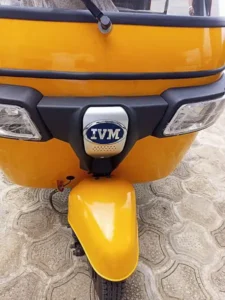
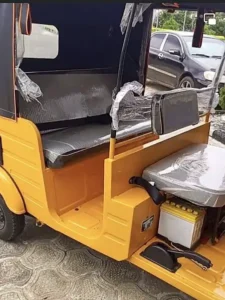
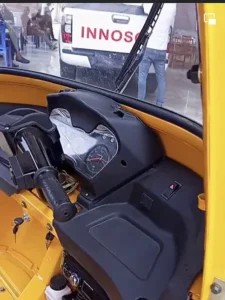
    Innoson Vehicle Manufacturing introduces IVM-branded tricycles ‘Keke Marwa’ into the Nigerian market.

    The 5-seater joins Innoson lineup of vehicles, including Connect, Caris, G20 Smart, Ikenga, G40 and G80.

    Technical details and the prices of IVM-branded three-wheeled vehicles isn’t available yet.

    Innoson Vehicle Manufacturing introduces IVM-branded tricycles ‘Keke Marwa’ into the Nigerian market.  The 5-seater joins Innoson lineup of vehicles, including Connect, Caris, G20 Smart, Ikenga, G40 and G80.  Technical details and the prices of IVM-branded three-wheeled vehicles isn’t available yet.   Fondly known as Keke Marwa, the three-wheeler has being a source of livelihood for millions of low-earners in Nigerians.  The popular three-wheeled vehicle is also the cheapest means of transportation to the common man.  Innoson Introduces IVM-branded Tricycles 'Keke Marwa' Into The Nigerian Market - autojosh  Innoson Introduces IVM-branded Tricycles 'Keke Marwa' Into The Nigerian Market - autojosh     Innoson Vehicle Manufacturing has expanded it portfolios with the introduction of IVM-branded tricycles, popularly known as Keke Marwa, into the Nigerian market.  The 5-seater (4-passenger, a driver) joins Innoson lineup of vehicles, including Connect, Caris, G20 Smart, Ikenga, and SUVs like G40 and G80.  Innoson Introduces IVM-branded Tricycles 'Keke Marwa' Into The Nigerian Market - autojosh  Chairman of Innoson Vehicles Manufacturing (IVM), Innocent Chukwuma, behind the wheels Technical details and the prices isn’t available yet, but the IVM-branded three-wheeled vehicle will compete with fast-selling brands like Bajaj in the Nigeria.  Innoson Introduces IVM-branded Tricycles 'Keke Marwa' Into The Nigerian Market - autojosh  In addition to being a source of livelihood for millions of low-earners in Nigerians, the three-wheeler is also the cheapest means of transportation to the common man.  First introduced into Nigeria in the 1990s by the current National Drug Law Enforcement Agency (NDLEA) boss, Buba Marwa, when he was the Military Administrator of Lagos State, Keke have long been an alternative means of transportation for Nigerians.  Innoson Introduces IVM-branded Tricycles 'Keke Marwa' Into The Nigerian Market - autojosh  Keke Marwa, seldomly used as Last Mile vehicle, continues to be a favourite for Nigerian users who ply unmotorable roads as well as those who cannot afford taxi or commercial motorcycle fares.  Keke, known by several names around the world including Tuk-tuks as well Keke Napep in Nigeria, is widely used in Lebanon, India, Egypt, Gaza, South Africa, Sudan and in all Nigerian cities.

    Fondly known as Keke Marwa, the three-wheeler has being a source of livelihood for millions of low-earners in Nigerians.

    The popular three-wheeled vehicle is also the cheapest means of transportation to the common man.

    Innoson Introduces IVM-branded Tricycles ‘Keke Marwa’ Into The Nigerian Market – autojosh
    Innoson Introduces IVM-branded Tricycles ‘Keke Marwa’ Into The Nigerian Market – autojosh

    Innoson Vehicle Manufacturing has expanded it portfolios with the introduction of IVM-branded tricycles, popularly known as Keke Marwa, into the Nigerian market.

    The 5-seater (4-passenger, a driver) joins Innoson lineup of vehicles, including Connect, Caris, G20 Smart, Ikenga, and SUVs like G40 and G80.

    Innoson Vehicle Manufacturing introduces IVM-branded tricycles ‘Keke Marwa’ into the Nigerian market.  The 5-seater joins Innoson lineup of vehicles, including Connect, Caris, G20 Smart, Ikenga, G40 and G80.  Technical details and the prices of IVM-branded three-wheeled vehicles isn’t available yet.   Fondly known as Keke Marwa, the three-wheeler has being a source of livelihood for millions of low-earners in Nigerians.  The popular three-wheeled vehicle is also the cheapest means of transportation to the common man.  Innoson Introduces IVM-branded Tricycles 'Keke Marwa' Into The Nigerian Market - autojosh  Innoson Introduces IVM-branded Tricycles 'Keke Marwa' Into The Nigerian Market - autojosh     Innoson Vehicle Manufacturing has expanded it portfolios with the introduction of IVM-branded tricycles, popularly known as Keke Marwa, into the Nigerian market.  The 5-seater (4-passenger, a driver) joins Innoson lineup of vehicles, including Connect, Caris, G20 Smart, Ikenga, and SUVs like G40 and G80.  Innoson Introduces IVM-branded Tricycles 'Keke Marwa' Into The Nigerian Market - autojosh  Chairman of Innoson Vehicles Manufacturing (IVM), Innocent Chukwuma, behind the wheels Technical details and the prices isn’t available yet, but the IVM-branded three-wheeled vehicle will compete with fast-selling brands like Bajaj in the Nigeria.  Innoson Introduces IVM-branded Tricycles 'Keke Marwa' Into The Nigerian Market - autojosh  In addition to being a source of livelihood for millions of low-earners in Nigerians, the three-wheeler is also the cheapest means of transportation to the common man.  First introduced into Nigeria in the 1990s by the current National Drug Law Enforcement Agency (NDLEA) boss, Buba Marwa, when he was the Military Administrator of Lagos State, Keke have long been an alternative means of transportation for Nigerians.  Innoson Introduces IVM-branded Tricycles 'Keke Marwa' Into The Nigerian Market - autojosh  Keke Marwa, seldomly used as Last Mile vehicle, continues to be a favourite for Nigerian users who ply unmotorable roads as well as those who cannot afford taxi or commercial motorcycle fares.  Keke, known by several names around the world including Tuk-tuks as well Keke Napep in Nigeria, is widely used in Lebanon, India, Egypt, Gaza, South Africa, Sudan and in all Nigerian cities.

    Innoson Introduces IVM-branded Tricycles ‘Keke Marwa’ Into The Nigerian Market – autojosh
    Chairman of Innoson Vehicles Manufacturing (IVM), Innocent Chukwuma, behind the wheels
    Technical details and the prices isn’t available yet, but the IVM-branded three-wheeled vehicle will compete with fast-selling brands like Bajaj in the Nigeria.

    Innoson Introduces IVM-branded Tricycles ‘Keke Marwa’ Into The Nigerian Market – autojosh
    In addition to being a source of livelihood for millions of low-earners in Nigerians, the three-wheeler is also the cheapest means of transportation to the common man.

    First introduced into Nigeria in the 1990s by the current National Drug Law Enforcement Agency (NDLEA) boss, Buba Marwa, when he was the Military Administrator of Lagos State, Keke have long been an alternative means of transportation for Nigerians.

    Innoson Vehicle Manufacturing introduces IVM-branded tricycles ‘Keke Marwa’ into the Nigerian market.  The 5-seater joins Innoson lineup of vehicles, including Connect, Caris, G20 Smart, Ikenga, G40 and G80.  Technical details and the prices of IVM-branded three-wheeled vehicles isn’t available yet.   Fondly known as Keke Marwa, the three-wheeler has being a source of livelihood for millions of low-earners in Nigerians.  The popular three-wheeled vehicle is also the cheapest means of transportation to the common man.  Innoson Introduces IVM-branded Tricycles 'Keke Marwa' Into The Nigerian Market - autojosh  Innoson Introduces IVM-branded Tricycles 'Keke Marwa' Into The Nigerian Market - autojosh     Innoson Vehicle Manufacturing has expanded it portfolios with the introduction of IVM-branded tricycles, popularly known as Keke Marwa, into the Nigerian market.  The 5-seater (4-passenger, a driver) joins Innoson lineup of vehicles, including Connect, Caris, G20 Smart, Ikenga, and SUVs like G40 and G80.  Innoson Introduces IVM-branded Tricycles 'Keke Marwa' Into The Nigerian Market - autojosh  Chairman of Innoson Vehicles Manufacturing (IVM), Innocent Chukwuma, behind the wheels Technical details and the prices isn’t available yet, but the IVM-branded three-wheeled vehicle will compete with fast-selling brands like Bajaj in the Nigeria.  Innoson Introduces IVM-branded Tricycles 'Keke Marwa' Into The Nigerian Market - autojosh  In addition to being a source of livelihood for millions of low-earners in Nigerians, the three-wheeler is also the cheapest means of transportation to the common man.  First introduced into Nigeria in the 1990s by the current National Drug Law Enforcement Agency (NDLEA) boss, Buba Marwa, when he was the Military Administrator of Lagos State, Keke have long been an alternative means of transportation for Nigerians.  Innoson Introduces IVM-branded Tricycles 'Keke Marwa' Into The Nigerian Market - autojosh  Keke Marwa, seldomly used as Last Mile vehicle, continues to be a favourite for Nigerian users who ply unmotorable roads as well as those who cannot afford taxi or commercial motorcycle fares.  Keke, known by several names around the world including Tuk-tuks as well Keke Napep in Nigeria, is widely used in Lebanon, India, Egypt, Gaza, South Africa, Sudan and in all Nigerian cities.

    Innoson Introduces IVM-branded Tricycles ‘Keke Marwa’ Into The Nigerian Market – autojosh
    Keke Marwa, seldomly used as Last Mile vehicle, continues to be a favourite for Nigerian users who ply unmotorable roads as well as those who cannot afford taxi or commercial motorcycle fares.

    Keke, known by several names around the world including Tuk-tuks as well Keke Napep in Nigeria, is widely used in Lebanon, India, Egypt, Gaza, South Africa, Sudan and in all Nigerian cities.

  • Fire Raze Goods Worth Millions In Akwa Ibom Market

    Fire Raze Goods Worth Millions In Akwa Ibom Market

    In the popular Itam Market in Uyo, Akwa Ibom State, a fire has destroyed eight lockup shops with goods worth millions of naira.

    The fire, the cause of which was unknown, was said to have started in a section of the market where there was no electrical connection.

    On Thursday, a visit to the market revealed that two of the eight affected shops had been demolished before the state fire department arrived.

    The fire, which began around 9 p.m., did not spread throughout the market because youths mobilized and evacuated goods from many shops before the fire was put out.

    Mr John, who sells stationery, was one of the victims who said he lost everything in the fire.

    “I left the market around 7 p.m., and by nine p.m., one of the security men called to tell me that my shop had burned down,” he said. When I returned, I was devastated to see that everything in my shop had been destroyed.

    Read Also: Omiyi succeeds Orjiakor as chairman of Seplat Energy

    “The fire department was here when I arrived, but I couldn’t even remove a pin from the shop,” she said, adding, “Honestly, I don’t know where to begin.”

    Another victim, Aniekpeno Akra, said he learned about the fire from a phone call, but when he arrived at his shop, he discovered the damage had already been done.

    Elder Godwin Ebong, Chairman of the Board of Trustees (BoT) of the market’s Traders Forum Association, said that when the union learned of the fire, it immediately contacted men from the fire service, who arrived within 45 minutes of the blaze breaking out.

    He went on to say that the union had reached out to both the local and state governments for assistance for the affected shop owners because of their quick response.
    He also stated that preliminary investigations had not revealed the cause of the fire, despite the fact that no electrical wiring was present in the affected area.

    “We cannot determine the cause of the fire outbreak until now,” he said. We conducted an internal investigation but were unable to locate the source. We’re still hoping to learn more about what happened in a few days.”

    “I called the fire service personnel,” said Mr Idorenyin Raphael, Governor Udom Emmanuel’s Special Assistant on Trade and Investment. They were on the ground in 20 minutes to put an end to the situation.”

  • Omiyi succeeds Orjiakor as chairman of Seplat Energy

    Omiyi succeeds Orjiakor as chairman of Seplat Energy

    Basil Omiyi has been named as the new independent non-executive chairman of Seplat Energy Plc. Mr. Omiyi takes over from A.B.C. Orjiakor, whose term ended on Wednesday.

    Seplat also appointed Charles Okeantalam as the firm’s senior independent non-executive director, a role previously held by Mr Omiyi, according to a notice published by the Nigerian Exchange on Thursday.

    The oil and gas firm said the appointment was approved following a unanimous vote by all its directors in compliance with the Companies and Allied Matters Act in Nigeria (“CAMA”).

    The appointments are effective right away.

    Omiyi Basil

    Since March 2013, Mr. Omiyi has served on the board of directors of Seplat Energy, rising to the position of senior independent non-executive director in February 2021.

    He has held senior positions in the energy industry in Nigeria and Europe, including becoming the managing director of Shell Petroleum Development Company of Nigeria in 2004.

    Until his retirement in 2009, he was also the country chairman of Shell Companies in Nigeria.

    Since 2015, he has served as the independent non-executive chairman of Stanbic IBTC Holdings, the local unit of South Africa’s Standard Bank Group. For pioneering leadership in Nigeria’s oil and gas industry, he was awarded the national honour of Commander of the Order of the Niger in 2011.

    Charles Okeahalam

    Charles Okeahalam, an independent non-executive director who joined the board in March 2013 as chair of Seplat Energy’s finance committee and a member of the Energy Transition, Remuneration, and Nominations & Governance committees.

    He has extensive experience in corporate finance and capital markets, as well as a broad understanding of African financial markets, economies, and the investment industry.

    “He was a co-founder of AGH Capital Group, a Johannesburg-based private equity and diversified investment holding company with assets in several African countries,” according to the document.

    He was a professor of Financial Economics and Banking at the University of the Witwatersrand in Johannesburg before co-founding AGH Capital Group in 2002.

    Previously, he advised several African central banks and government ministries, as well as the World Bank and the United Nations.

    He has served on several boards and is the former non-executive chairman of Nigeria’s Heritage Bank Limited.

    Okeahalam has served as the Nigeria Mortgage Refinance Company’s non-executive chairman.

  • ABP loan: CBN to take action against defaulting farmers

    ABP loan: CBN to take action against defaulting farmers

    Farmers who have not paid back loans obtained under the Anchor Borrowers’ Programme (ABP) have been urged to do so by the Central Bank of Nigeria (CBN).

    The appeal was made in Ibadan at the Agribusiness Innovation Clinic by Mr Sadeeq Ajayi of the CBN Development Finance Office.

    The clinic, titled “Fostering Innovation and Collaboration Across the Agricultural Value Chain,” was organised by the Global Alliance for Improved Nutrition, according to the Nigerian News Agency (NAN) (GAIN).

    According to NAN, ABP is an agricultural loan scheme launched by the Federal Government in 2015 through the Central Bank of Nigeria (CBN) to provide loans (in kind and cash) to small holder farmers in order to increase agricultural production, create jobs, reduce food import bills, and conserve foreign reserves.

    The majority of farmers in Oyo State who benefited from the scheme, according to Ajayi, have not repaid their loans.

    He claimed that the apex bank’s inability to recover loans from defaulting farmers had jeopardised the scheme, and that it had prevented other farmers from using it.

    “While the Anchor Borrowers’ Program has had some success, farmers’ failure to repay their loans has been a major setback.”

    “Many of the farmers refused to repay their loans because they believed that because the CBN was the lender, the loan was a ‘national cake,’ and they did not have to repay what they considered to be theirs as citizens.”

    “This attitude has made it difficult for other farmers who want to take advantage of the loan to do so,” he said.

    Stakeholders, including traditional rulers, should urge defaulting farmers to repay their loans quickly for the sake of others, according to Ajayi.

    “Of course, we’re talking to a lot of people,” he said, “and we expect the narrative to shift soon so that more people can get access to the fund.”

    Mr Olasukanmi Olaleye, the Oyo State Commissioner for Trade, Industry, Investment, and Cooperatives, lauded GAIN’s initiative to combat malnutrition in the country in his keynote address.

    Read Also: Dingyadi: Magu retired before his promotion was approved

    Mr Mukaila Oladipo, a Deputy Director in the ministry, represented Olaleye, who stated that food fortification is one of the safest, most effective, and cost-effective ways to address the country’s micronutrient gaps.

    Mr. Godwin Ehiabhi, a Senior Project Manager with GAIN Nigeria, also stated that improved access to safe and nutritious food would help to reduce the country’s high malnutrition rate.

  • Nwaokolo, CEO of Superblachomes, explains how he got into real estate business

    Nwaokolo, CEO of Superblachomes, explains how he got into real estate business

    Barbara Fumnaya Nwaokolo is the attractive, graceful, and elegant Chief Executive Officer of Superblachomes, a real estate firm that is poised to become the sector’s next big thing.

    Barbara Nwaokolo has quickly established herself as a symbol of success and a role model in a male-dominated industry.

    The vivacious real estate entrepreneur has been sharing her experiences in the industry and how she learned the ropes as a real estate agent.
    “I went online and looked up things like real estate basics, and there was this girl I was following who gave me suggestions on what I was getting myself into.” “Real estate is much more than just buying buildings,” explained Superblachomes’ creator.

    Read Also:  Nwajiuba: Ghost of ASUU should hunt every administration

    “I do invest for clients,” the owner of Superblachomes explained further. I have developers that want a specific sum of money, and I have clients who may have that sum, so I ask them, “Do you have this money on hand?” Okay, give it to me, you’ll get a 20 to 25% return on your investment in the following 10 months, and that’s it!

    “The next step is for them to bring in their lawyers, and the funds are transferred, but they keep their collateral, which could be land or whatever else that the developer gives them.” Finally, whether you sold the property or invested the money is none of our business; it is the developer’s.

    “You’re giving my customer his money, as well as the money that’s supposed to come back with the investment,” the Amazon behind Superblachomes stated.

    The CEO of Superblachomes has asked for a stakeholders roundtable to discuss industry concerns in order to enhance the sector.
    “Once again, developers present a challenge. “As I tell most agents, it’s wonderful that we all sit together and have a platform where we can truly discuss things since there’s a lot going on that we can’t talk about,” said Superblachomes’ creator.

    “There are developers you sell properties for, and when it comes time for them to pay you, stories come out that aren’t supposed to be,” the Superblachomes boss continued. Some buyers are dramatic, and when it comes time to pay you, they say things like “o I didn’t realise I was going to pay you” and “what do you mean?”

    “These are some of the issues we’re dealing with.” Some developers strive for intelligence, and we still have clients who strive for intelligence. Once they get the developer’s contact information, they may declare that they are no longer interested in the property and, behind your back, seal it. But if you put on that show, I’ll know how to obtain my money from you because I don’t have the time.

    Read Also:  2023: We Will Give 90% Votes To Amaechi – Taraba APC

    “I believe developers should learn to perform better because convincing a client to acquire a property is difficult, so when that is done or whatever it is, don’t give me an excuse since I brought the client,” stated the CEO of Superblachomes.

  • The Coronavirus Epidemic Might Be Much Worse Than We Thought

    The Coronavirus Epidemic Might Be Much Worse Than We Thought

    Sugar seems to have developed a reputation as the big bad wolf in relation to health. We have reported on numerous studies associating sugar intake with increased aging, cardiovascular disease, obesity and even cancer. Such research has led to many health experts around the globe calling for reductions in recommended sugar intake, with some saying we should cut out sugar completely. But is it really that bad for our health?

    There are many different types, including glucose, fructose, lactose, maltose and sucrose. Some of these sugars, such as glucose, fructose and lactose, occur naturally in fruits, vegetables and other foods. But many of the foods we consume contain “added” sugars – sugar that we add to a product ourselves to enhance the flavor or sugar that has been added to a product by a manufacturer.

    The most common sources of added sugars include soft drinks, cakes, pies, chocolate, fruit drinks and desserts. Just a single can of cola can contain up to 7 tsps of added sugar, while an average-sized chocolate bar can contain up to 6 tsps.

    It is added sugars that have been cited as a contributor to many health problems. In December 2014, MNT reported on a study in the journal Open Heart claiming added sugars may increase the risk of high blood pressure, even more so than sodium. And in February 2014, a study led by the Centers for Disease Control and Prevention (CDC) associated high added sugar intake with increased risk of death from cardiovascular disease (CVD).

    A 2020 study published in The American Journal of Clinical Nutrition suggested that consumption of sugar-sweetened beverages increases weight gain in both children and adults, while a review paper from the World Health Organization (WHO) notes an increase in the consumption of such beverages correlates with the increase in obesity.

  • Find Out How Many Confirmed Cases Are in Your Area Right Now?

    Find Out How Many Confirmed Cases Are in Your Area Right Now?

    Sugar seems to have developed a reputation as the big bad wolf in relation to health. We have reported on numerous studies associating sugar intake with increased aging, cardiovascular disease, obesity and even cancer. Such research has led to many health experts around the globe calling for reductions in recommended sugar intake, with some saying we should cut out sugar completely. But is it really that bad for our health?

    There are many different types, including glucose, fructose, lactose, maltose and sucrose. Some of these sugars, such as glucose, fructose and lactose, occur naturally in fruits, vegetables and other foods. But many of the foods we consume contain “added” sugars – sugar that we add to a product ourselves to enhance the flavor or sugar that has been added to a product by a manufacturer.

    The most common sources of added sugars include soft drinks, cakes, pies, chocolate, fruit drinks and desserts. Just a single can of cola can contain up to 7 tsps of added sugar, while an average-sized chocolate bar can contain up to 6 tsps.

    It is added sugars that have been cited as a contributor to many health problems. In December 2014, MNT reported on a study in the journal Open Heart claiming added sugars may increase the risk of high blood pressure, even more so than sodium. And in February 2014, a study led by the Centers for Disease Control and Prevention (CDC) associated high added sugar intake with increased risk of death from cardiovascular disease (CVD).

    A 2020 study published in The American Journal of Clinical Nutrition suggested that consumption of sugar-sweetened beverages increases weight gain in both children and adults, while a review paper from the World Health Organization (WHO) notes an increase in the consumption of such beverages correlates with the increase in obesity.

  • The Coronavirus Hospital Crisis and What to Do to Avoid It

    The Coronavirus Hospital Crisis and What to Do to Avoid It

    Sugar seems to have developed a reputation as the big bad wolf in relation to health. We have reported on numerous studies associating sugar intake with increased aging, cardiovascular disease, obesity and even cancer. Such research has led to many health experts around the globe calling for reductions in recommended sugar intake, with some saying we should cut out sugar completely. But is it really that bad for our health?

    There are many different types, including glucose, fructose, lactose, maltose and sucrose. Some of these sugars, such as glucose, fructose and lactose, occur naturally in fruits, vegetables and other foods. But many of the foods we consume contain “added” sugars – sugar that we add to a product ourselves to enhance the flavor or sugar that has been added to a product by a manufacturer.

    The most common sources of added sugars include soft drinks, cakes, pies, chocolate, fruit drinks and desserts. Just a single can of cola can contain up to 7 tsps of added sugar, while an average-sized chocolate bar can contain up to 6 tsps.

    It is added sugars that have been cited as a contributor to many health problems. In December 2014, MNT reported on a study in the journal Open Heart claiming added sugars may increase the risk of high blood pressure, even more so than sodium. And in February 2014, a study led by the Centers for Disease Control and Prevention (CDC) associated high added sugar intake with increased risk of death from cardiovascular disease (CVD).

    A 2020 study published in The American Journal of Clinical Nutrition suggested that consumption of sugar-sweetened beverages increases weight gain in both children and adults, while a review paper from the World Health Organization (WHO) notes an increase in the consumption of such beverages correlates with the increase in obesity.

  • Your Questions About Life Under Coronavirus Answered Here

    Your Questions About Life Under Coronavirus Answered Here

    Sugar seems to have developed a reputation as the big bad wolf in relation to health. We have reported on numerous studies associating sugar intake with increased aging, cardiovascular disease, obesity and even cancer. Such research has led to many health experts around the globe calling for reductions in recommended sugar intake, with some saying we should cut out sugar completely. But is it really that bad for our health?

    There are many different types, including glucose, fructose, lactose, maltose and sucrose. Some of these sugars, such as glucose, fructose and lactose, occur naturally in fruits, vegetables and other foods. But many of the foods we consume contain “added” sugars – sugar that we add to a product ourselves to enhance the flavor or sugar that has been added to a product by a manufacturer.

    The most common sources of added sugars include soft drinks, cakes, pies, chocolate, fruit drinks and desserts. Just a single can of cola can contain up to 7 tsps of added sugar, while an average-sized chocolate bar can contain up to 6 tsps.

    It is added sugars that have been cited as a contributor to many health problems. In December 2014, MNT reported on a study in the journal Open Heart claiming added sugars may increase the risk of high blood pressure, even more so than sodium. And in February 2014, a study led by the Centers for Disease Control and Prevention (CDC) associated high added sugar intake with increased risk of death from cardiovascular disease (CVD).

    A 2020 study published in The American Journal of Clinical Nutrition suggested that consumption of sugar-sweetened beverages increases weight gain in both children and adults, while a review paper from the World Health Organization (WHO) notes an increase in the consumption of such beverages correlates with the increase in obesity.