Category: Government

  • President Bola Tinubu Celebrates Ooni Of lfe’s 50th Birthday.

    President Bola Tinubu Celebrates Ooni Of lfe’s 50th Birthday.

    Felicia Asuquo,Abuja

    President Bola Tinubu has proudly join other Nigerians, the people and chiefs of lle-lfe, and the global Yoruba community in commemorating the 50th birthday of the Ooni of Ife, Oba Adeyeye Enitan Ogunwusi, CF R, the Ojaja II.

    In a release signed by the Special Adviser to the President on lnformation and Strategy,Mr Bayo Onanuga,the President noted Ooni’s extraordinary leadership and maturity since ascending the throne at 41, emphasising his significant role in preserving the rich traditions of the Yoruba people in the ancient city known as The Source.

    Tinubu went further to acknowledge Oba Ogunwusi’s deep sense of duty, wisdom, and knowledge as he fulfils his responsibilities as both the traditional ruler of lle-Ife, Osun State, and the revered spiritual leader of the Yoruba people.

    The President also recognises Ooni’s critical contributions as Co-Chairman of the National Council of Traditional Rulers of Nigeria, where he serves as a unifying figure, a steadfast supporter of government policies, and a passionate advocate for religious tolerance, peace, and the unification of our nation.

    While commending Oba Ogunwusi’s tireless advocacy for women and youth empowerment through education and entrepreneurship,he underscore his admirable philanthropy and unwavering commitment to uplifting those in need throughout Nigeria and beyond.

    “With heartfelt optimism and support, the President pays tribute to the Ooni for exemplifying the traditional Yoruba values of humility, peace, and generosity while also honouring the dignity and integrity of his exalted throne.

    As the esteemed Yoruba monarch celebrates this significant milestone, President Tinubu offers his sincere prayers for the continued success and prosperity of His Imperial Majesty’s reign, which will undoubtedly benefit the people of Ife and the nation at large.”the statement reads.

  • Community Growth Takes Center Stage As Ejigbo LCDA Boss,Hon Oloyede Bello Prepares For 2025 Budget.

    Community Growth Takes Center Stage As Ejigbo LCDA Boss,Hon Oloyede Bello Prepares For 2025 Budget.

    Emmanuel lkpeama 

    The Executive Chairman of Ejigbo Local Council Development Area, Hon. Monsurudeen Oloyede Bello, continues to make strides in infrastructural development, education, environment and healthcare, as the council prepares for the 2025 budget planning.

    At the Stakeholders’ Forum held today, Hon. Bello addressed community leaders, stakeholders, and residents, showcasing the significant progress made in the past year. The forum, which serves as a platform for residents to contribute their ideas and opinions toward the council’s future plans, focused on the upcoming budget and outlined key developments across the LCDA.

    Hon. Bello proudly highlighted the recent commissioning of the Akinsanya Ajaloleru Nursery and Primary School in Ilamoshe, Ejigbo, inaugurated by the Deputy Governor of Lagos State, His Excellency Dr. Obafemi Kadri Hamzat.

    “In a remarkable display of progress across multiple sectors, Hon. Monsurudeen Oloyede Bello has spearheaded several key initiatives within Ejigbo LCDA. In the education sector, the newly commissioned Akinsanya Ajaloleru Nursery and Primary School in Ilamoshe, Ejigbo, stands as a beacon of quality learning, inaugurated by the Deputy Governor of Lagos State, Dr. Obafemi Kadri Hamzat.

    Also, in infrastructure, the long-awaited Ifoshi Road was commissioned by the Ooni of Ife, Oba Enitan Ogunwusi, Ojaja II, and further infrastructural projects are set to be commissioned, including Kashimawo Alimi Street, Ejigbo Park at Alara Street, Falana Alimi Street, Morning Star PHC, the newly renovated Council Secretariat, and the CDC Office at Dauda Ilo Street.

    On the healthcare front, the chairperson of Ejigbo LCDA Mrs Fatima Oloyede Bello flagged off the Breastfeeding/Maternal Newborn Child Adolescent Health Week at Ejigbo Primary Healthcare Centre and at the same time the council boss launched a comprehensive medical outreach aimed at providing essential health services to council staff.

    Additionally, in a bid to enhance productivity within the LCDA, a a week employee re-orientation workshop was held to foster excellence among the staff, signaling a comprehensive approach to governance and community development.” Hon. Bello highlighted.

    At the conclusion of Hon. Monsurudeen Oloyede Bello’s address, the entire hall erupted in a resounding round of applause. The Executive Committee, Legislators, Management team, APC party faithfuls, Security operatives, and other key stakeholders all rose to their feet in unison, acknowledging the chairman’s unwavering dedication to steering Ejigbo LCDA toward becoming a more vibrant and habitable community.

    As preparations for the 2025 budget begins, the Stakeholders’ Forum provides a platform for community members to voice their needs and suggestions for future projects.

    Hon. Bello reiterated his administration’s commitment to a bottom-up approach in policy formulation, ensuring that the voices of Ejigbo residents are heard and reflected in the council’s development agenda.

    Hon. Monsurudeen Oloyede Bello remains steadfast in his goal to elevate Ejigbo LCDA to new heights of excellence, promising that no one will be left behind in the journey toward progress.

    The event was witnessed by the Executive committee, Legislators, Management, APC party faithfuls, Security operatives and stakeholders of Ejigbo LCDA.


  • Why We Are Going To Pay N85,000 As Minimum Wage–Gov Sanwo Olu

    Why We Are Going To Pay N85,000 As Minimum Wage–Gov Sanwo Olu

    …….As He Promises To Make lt N100,000 January 2025.

    Emmanuel lkpeama

    The Lagos State Governor, Babajide Sanwo-Olu, has disclosed that the reason why the state decided to increase the minimum wage signed by President Tinubu was not to outdo others but because it has the capacity to so.

    The governor stated this an interview on Channels Television”Politics Today”stating that the state will pay N85,000 minimum wage to its workers, which is N15,000 higher than the N70,000 approved by the Federal Government in July.

    “I am glad to let you know that the minimum wage for Lagos which we conversed and discussed with our union is N85,000 today,” Sanwo-Olu said

    “It is not a competition, so I am not going to say we are paying more than some other people, it is a function of affordability and it is a function of capacity, but we know too well that when people live in Lagos, Lagos has a premium in terms of even the cost of living, we are fully aware.”he stated

    It will be recalled that President Bola Tinubu signed the new N70,000 minimum wage bill into law in July, ending months of deliberations between government representatives, labour unions and the private sector.

    The governor also revealed that the state had earlier in the year increased the salary of workers, adding that it is his wish to be able to make the minimum wage of N100,000 in January 2025.

    “We actually increased salaries earlier in the year and deserving so for our staff and we will continue to do that.

    “I would like to come back to you in January to say I have been able to increase the minimum wage of Lagos to N100,000 not because I want to make anybody look bad, it is really because I want my people to have a living wage, I want them to really be able to know that government is working for them,” he submitted.


  • VP Shettima Embarks On Two Days Visit To Sweden.

    VP Shettima Embarks On Two Days Visit To Sweden.

    Felicia Asuquo, Abuja 

    The Vice President, Senator Kashim Shettima, will depart Abuja for Sweden on a two-day visit to represent Nigeria in bilateral engagements with the Scandinavian nation.

    A statement by the Senior Special Assistant to The President on Media & Communications (Office of The Vice President), Stanley Nkwocha on Wednesday, said Shettima’s visit is at the instance of President Bola Tinubu.

    The Vice President, during the working visit, will engage in high-level bilateral talks with key government officials, including a meeting with Crown Princess Victoria of Sweden and the Swedish Prime Minister.

    Senator Shettima will use the visit to explore opportunities for strengthened collaboration between Nigeria and Sweden in areas such as ICT, innovation, education, digitalisation, sustainable transport, mining, and agriculture.

    He will meet with key stakeholders in both the Government and Private Sector.

    The Vice President will also meet with Norrsken, a Stockholm-based venture capital impact investor, which recently launched Norrsken22, a USD 205 million tech investment fund for Africa.

    Norrsken22 is a technology growth fund, backed by over 30 prominent unicorn founders, partnering with exceptional entrepreneurs to build Africa’s next tech giants.

    The meeting with Norrsken will provide insights into how Nigerian entrepreneurs can benefit from this fund and further strengthen the technology ecosystem in Nigeria.

    Notably, 40% of the investments from Norrsken22 are expected to be allocated to Nigerian technology entrepreneurs.

    Twelve (12) Nigerian private sector companies that are doing business with Sweden are going independently as a private sector bloc.

    While in Sweden, VP Shettima is also expected to articulate Nigeria’s economic vision and the reforms being undertaken by the administration to create a business-friendly environment in Nigeria for investors. The myriad of opportunities that abound in Africa’s largest economy will also be showcased.

    The Vice President is expected back in the country on Saturday.

  • Nigeria’s Evolving Federalism and the Search for Sustainable Local Government Administration

    Nigeria’s Evolving Federalism and the Search for Sustainable Local Government Administration

    By Prof. Chukwuma Charles Soludo, CFR
    Governor, Anambra State

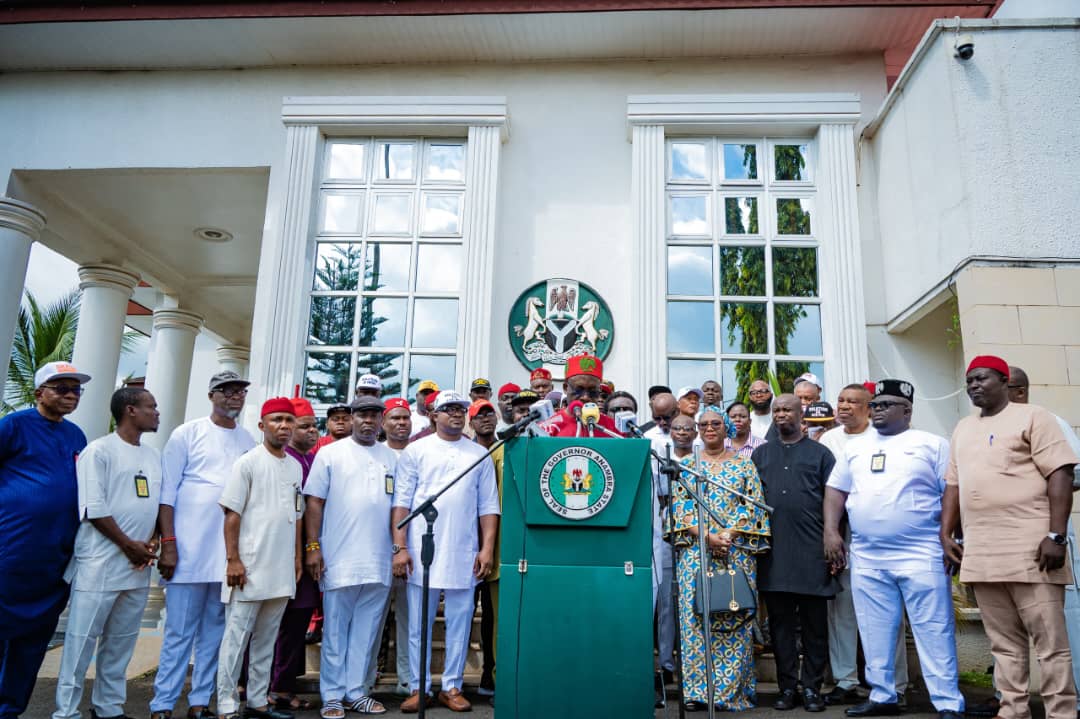
    The Anambra State House of Assembly passed two progressive legislations pursuant to its powers under the Constitution (Anambra State Economic Planning and Development Law, 2024; and Anambra State Local Government Administration Law, 2024), and I have signed them into law. This has generated commentaries and debates especially in relation to their consistency or inconsistency with the recent Supreme Court judgement and the mantra of “local government autonomy.”

    My media team, other members of my government as well as well meaning Nigerians have vigorously defended these progressive laws and that should suffice. At this moment in Nigeria, being a state governor is not a fanciful job, especially given the gamut of allegations and innuendoes levelled against governors vis-a-vis local government funds. In the circumstance, any comment by me would be construed as self defence. However, I have a citizen duty to clarify and contribute to the discourse—especially as one who has been extensively involved in the debate and search for a more perfect union.

    At the outset, let me make an important disclosure. I am a federalist and a proponent of competitive federalism for a multi-ethnic, multi-religious, vast country as Nigeria. From my limited knowledge, I do not know any federation (except perhaps some variants in Brazil) where a uniform local government system is provided for in a federal constitution or where the local government is treated as a de-facto federating unit. I understand that the issue of appropriate local government system was vigorously debated by the framers of the 1999 Constitution and a compromise was to insert Sections 7 Constitution which, among others, empowers each State through its House of Assembly to make laws which provide “for the establishment, structure, composition, finance, and functions…” of the local governments. Pioneered by Lagos State about 2004 several states have various laws pursuant to these Constitutional powers. The composition or structure of local governments in Lagos or Ebonyi state is certainly different from Anambra.

    Also, the debate as to whether local governments should be part of the federal constitution or left to each federating unit (state) to determine its own appropriate local government system is still an unsettled matter. The APC committee on restructuring Nigeria proposed scrapping the local government from the Constitution of Nigeria. As the former chairman of planning and strategy committee of Ohanaeze Ndigbo Worldwide, I know that the published position of Ndigbo in 2018 was that local governments be scrapped from the Constitution and let each state/region determine the type of local administration that suits it. Similar positions have been argued by Afenifere, PANDEF, Middle Belt Forum, etc. This is an issue for another day.

    In the context of our evolving federalism, I see the recent Supreme Court judgment regarding the direct transfer of funds belonging to the local governments as an important contribution to our search for effective and transparent administration of resources at the local level. I see the judgment as an opportunity for public good. Given the Constitutional mandate for joint planning between the State and local government, I see the judgment as an opportunity for greater transparency and predictability regarding the sources and uses of funds, as well as greater coordination and collaboration between the State and local government. If there was any state where the State-Local Government Joint Accounts Committee did not manage the LG funds transparently, the Supreme court judgment is an opportunity and mandate to do it differently by further empowering the LG administration.

    But there is more work to be done. We all need to think through how the funds transferred to the LGs should be appropriated, spent, or accounted for. Monies meant for the federal or state governments are not spent by the president or governors. The National Assembly and State Assemblies make appropriation laws on how and by whom the monies should be spent and provide oversight functions. What happens to the monies directly sent to the LGs? Who spends the monies, on what and how will they be accounted for?
     

    This is where Section 7 of the Constitution comes handy, and the Anambra State House of Assembly has risen to the occasion. Happily, the Supreme Court did not nullify Section 7 of the Constitution. The new laws by Anambra House of Assembly are therefore consequential to give operational life to the Supreme Court judgment and not to undermine it. If the State House of Assembly abdicates this constitutional duty, the Local Government will then have no law on the use and management of its finance which the Constitution has given the State House of Assembly (and only the House of Assembly) the mandate to legislate on. Indeed, in many states the House of Assemblies retain the power to suspend or remove chairpersons of local governments.

    By the way, isn’t the legislative authority exercised by the State Assemblies under Section 7 of the Constitution similar to the powers granted by the Constitution to the National Assembly over the Federal Capital Territory and its Area Councils? I understand that the Senate President had recently at one of the Plenary Sessions rhetorically asked if it was indeed possible to grant the kind of “autonomy” some people talk about without major amendments to the Constitution. Many Nigerians ask the same question. I also understand that the Senate recently resolved to begin the process of Constitutional amendment in this regard. This is a welcome development. But until that is done, our laws pursuant to the Constitution and designed to give operational effect to the Supreme Court judgment remain subsisting and valid.

    A critical instrument for muddling through our evolving federation and delivering higher efficiency and effectiveness in development is through structured collaboration among the tiers of government. No tier of government enjoys absolute autonomy. For example, the FGN has exclusive right over solid minerals, but the States have exclusive right over the land. Only a collaborative framework will maximize benefits from natural resources. Currently, there is a collaborative funding for the security agencies. The States and LGs contribute tens of billions monthly and deducted directly from FAAC every month towards the funding of the armed forces which are exclusively under the FGN. At the state levels, each state is spending a fortune of its own revenues on logistics and operational costs for the federal security agencies. The FGN, States and LGs are jointly paying for the FGN initiative on metering, etc. The states understand the above “emergency measures” as part of the collaborative arrangements to make Nigeria work better. A federal agency, the Debt Management Office (DMO) must clear any state government seeking to borrow from domestic financial system, while the National Assembly must approve States’ external borrowing. The federal UBEC insists on counterpart funding by states before it can release federal funds for basic education and also supervises the utilization of the contributions by states. There is a dozen or more areas of oversight of federal agencies over State finances. The above illustrations are simply to make the point that no tier of government can function in absolute autarky without collaboration with others. Given the functions assigned to the LGs by the Constitution, it is impossible to see how they can perform them without active collaboration with State governments. Because the Constitution did not envisage “absolute autonomy” for the Local Governments, it gave the State House of Assembly powers to make laws for them and equally did not create a Local Government Judiciary distinct from the State Judiciary.

    The two legislations passed by the progressive Anambra House of Assembly seek to achieve three objectives: consistency with the Constitution and judgment of the Supreme Court; enhanced transparency and productive collaboration; and promotion of sustainable finance, democracy, and development at the local government. The laws seek to codify the collaborative arrangements to promote transparency and accountability. We seek to avoid ad-hoc or arbitrary arrangements—- building to last! The good news is that the eminent jurists at the Supreme Court did not outlaw collaboration and cooperation among the LGs in funding joint or common services, nor did they nullify Section 7 of the Constitution. What the new laws simply require is that ALL the chairmen/mayors of the local governments, meeting under the aegis of the State Economic Planning Board (similar to the National Economic Council) decide what percentage of their revenues to contribute to a Joint Local Government Account to pay for common/pooled services such as: (a) payment of salaries, allowances, gratuities and pensions of workers and retirees under the Local Government Service Commission; (b) provision and maintenance of primary, adult and vocational education including all salaries, allowances, gratuities and pensions payable in that regard; (c) provision and maintenance of primary health services including all salaries, allowances, gratuities and pensions payable in that regard; (d) payment of allowances to traditional rulers and Presidents-General of the communities; (e) Subventions to the Local Government Service Commission; and even for community security.

    What many people do not know is that the Constitution puts primary education and primary health care under the local governments. Many also do not know that primary school teachers are pooled under the UBEC—Universal Basic Education Commission. Workers in all the LGs are also pooled staff under the Local government service commission. Ditto for primary health workers. Absolute autonomy would mean that each LG would have its own primary education policy, employ its own teachers, and pay them whatever it can afford and whenever it can do so, etc. Now that Anambra has free education for primary and secondary education in all public schools, some LGs may decide that they cannot afford it. It might even get to a point where some LGs might ask “non-indigenes” who are workers in the LGs or teachers in primary schools to “go home” to their LGs of origin due to budgetary or other constraints.
    Indeed, absolute autonomy of LGs would mean that institutions that pool resources and workers would be scrapped including the Local Government Service Commission, Local Government Pension Board, the Anambra State Universal Basic Education Board (ASUBEB), the Primary Health Care Agency, etc. Does it mean that the federal UBEC or Federal Ministry of Health would have to deal with each of the 774 LGs in respect of primary education or primary health care instead of coordinated through the State UBEC or state primary health care agency? This would be a recipe for humongous chaos, not only for the administration of local government and pensions, but more so in the primary education and primary health sectors. My administration inherited 4 years arrears of gratuity which we have been clearing systematically. How do you share the outstanding balance among the LGs or pay pensions to over 15,000 LG retirees who served the LGs as a pool without pooling of funds? Some years ago, some LGs rejected teachers posted to their LGs because it would jack up their wage bill.

    Yes, our nascent federation is evolving but some of us as practitioners are determined to make it work for the people while we have the opportunity. I believe in building enduring institutions, especially ones founded upon due process, transparency, and rule of law. People remind me that many of the institutional reforms we established at the CBN still endure. Since assumption of office as Governor 30 months ago, we have devoted a lot of efforts in reforming and strengthening institutions, including the local government administration. Today, Anambra State under my watch is ranked number 1 among the 36 states on fiscal transparency by BudgIT, and among the top five states on financial sustainability. We inherited a local government system with four-year arrears (2018-2022) of gratuity to retired primary school teachers and other staff of local government. We have restructured their finances back to sustainability. Everyone who retired from the local government and State civil service since my tenure is paid gratuity/pension, and we are on course to clear the outstanding arrears soon. Three years’ arrears on counterpart funding for Universal Basic Education Commission (UBEC) has been cleared, resulting in billions of Naira recently invested in our primary schools. Some 326 primary health centres are being constructed or modernized in all the 326 wards in the state as well as employing hundreds of medical personnel to man the primary health centres. Most of the local government secretariats have been remodelled and equipped, and the LG system is once again alive. This is not to mention that 3,615 out of the 8,115 new teachers recruited under my administration are for primary schools and they are being paid. We do not want to go back!

    So, the laws are designed to protect our gains so far and strengthen the system for the future consistent with the Constitution and laws. I always remind myself that I am a bird of passage, and eventually, I will leave office. But we must build to last— for the next generations. More specifically, the new laws are designed to protect our workers at the local level and protect our primary education and primary health care from chaos and collapse. Many teachers and pensioners wrote me to passionately plead that they do not want the agony of the 1990s–2003 when some primary school teachers in some LGs were paid and others owed salaries. I just read a report that the organized labour (particularly the Nigerian Union of Local Government Employees, NULGE; Nigerian Union of Teachers, NUT; and Nigerian Union of Pensioners) were urging the FGN not to transfer workers/teachers salaries to the local government in the name of “local government autonomy”. No law protects the workers against nonpayment of salaries or pensions by governments. In Anambra we want to ensure that we do not wake up and hear that some LGs paid salaries of primary school teachers and others did not or that some pensioners are paid and others not, or that some contribute towards UBEC counterpart-funding while others do not. The laws seek to create a framework to ensure that the basic functions mandated by the Constitution for the local governments are discharged as a matter of first-line charge or the irreducible minimum. With these laws, workers, and retirees from the local government system in Anambra (primary school teachers, primary health workers, workers in the local government system under the local government service commission) can sleep with their two eyes closed. The LGs and State government can also collaborate in the security of the communities, just as the States and FGN collaborate in funding even the federal security agencies.

    It is equally important to understand that the Constitution mandated this collaboration between the States and Local Governments when in its section 7 (3), it provides that “it shall be duty of a local government council within the State to participate in economic planning and development of the area referred to in sub section 2 of this section and to this end, an economic planning board shall be established by a Law enacted by the House of Assembly of the State”. This provision gave rise to the establishment of the Anambra State Economic Planning Board of which all the local government chairpersons are members and who, among other things, decide on the percentage to be contributed to the Local Government Joint Account. It is important to appreciate that this money is not handed over to the State but remains with the Local Governments under a joint pool for the discharge of certain services by the local governments which services are uniform/common among the local governments as stated earlier.
    In sum, the laws ensure that the State can function in a cohesively planned, transparent and sustainable manner to maximize the security and welfare of the citizens. They constitute a very smart solution to a possible systemic threat.

    Governors are often accused of seeking to “control” LG funds with insinuations that LG funds are mismanaged. Of course, in a society where public office is seen as “dinning table” and public trust is low, people judge others by their own standards: by what they would do if they were in the position. I often ask: control for what? While I cannot hold brief for every governor, I know that most states are struggling to ensure a solvent local government system. I wish I can be spared the headache, if not for the predictable collateral damage to the system if we abdicate from structured oversight and collective accountability. The challenge ahead can be daunting given the quantum rise in wage bills because of the new minimum wage, as well as consequential rise in future pension/gratuity payments. Without active collaboration and coordination between state and local governments, many LGs will end up in a huge financial mess, requiring bailouts by state governments or will FGN directly intervene in every case of insolvency among the 774 LGs?

    In conclusion, the progressive legislations by the State Assembly are designed to unleash the creative powers of the LGs, encourage peer learning, optimal development outcomes in planning and execution among the LGs, as well as novel accountability and transparency. The laws are ingenious by creating multiple layers of collaborative oversight whereby the LGs agree on monies to set aside and managed collectively by them for common services or first-line charges, while the rest is appropriated by the Congress of Councillors in each LG. In an innovative sense, the legislative powers – including powers of appropriation and oversight now largely reside with the local government legislature—Congress of Councillors, which is empowered to make bye-laws, which are in the nature of regulations, for the Local Governments (as it is the House of Assembly that is empowered by the Constitution to enact laws to guide the Local Governments).

    Since neither the Constitution nor the Supreme Court judgment prescribes the manner of appropriation, expenditure, and audit/accountability for local government funds, the House of Assembly and the Congress of Councillors fill in the blanks under the new laws pursuant to Section 7 of the Constitution. The evolution of our federalism is a work-in-progress, and the new Anambra laws constitute creative and progressive additions to institution-building. May the Federal Republic of Nigeria continue to win!

  • Lagos Lawmakers,A Threat To LG Autonomy, Says Civil Society Group

    Lagos Lawmakers,A Threat To LG Autonomy, Says Civil Society Group

    …….Urges them to respect LG Autonomy 

     Emmanuel lkpeama 

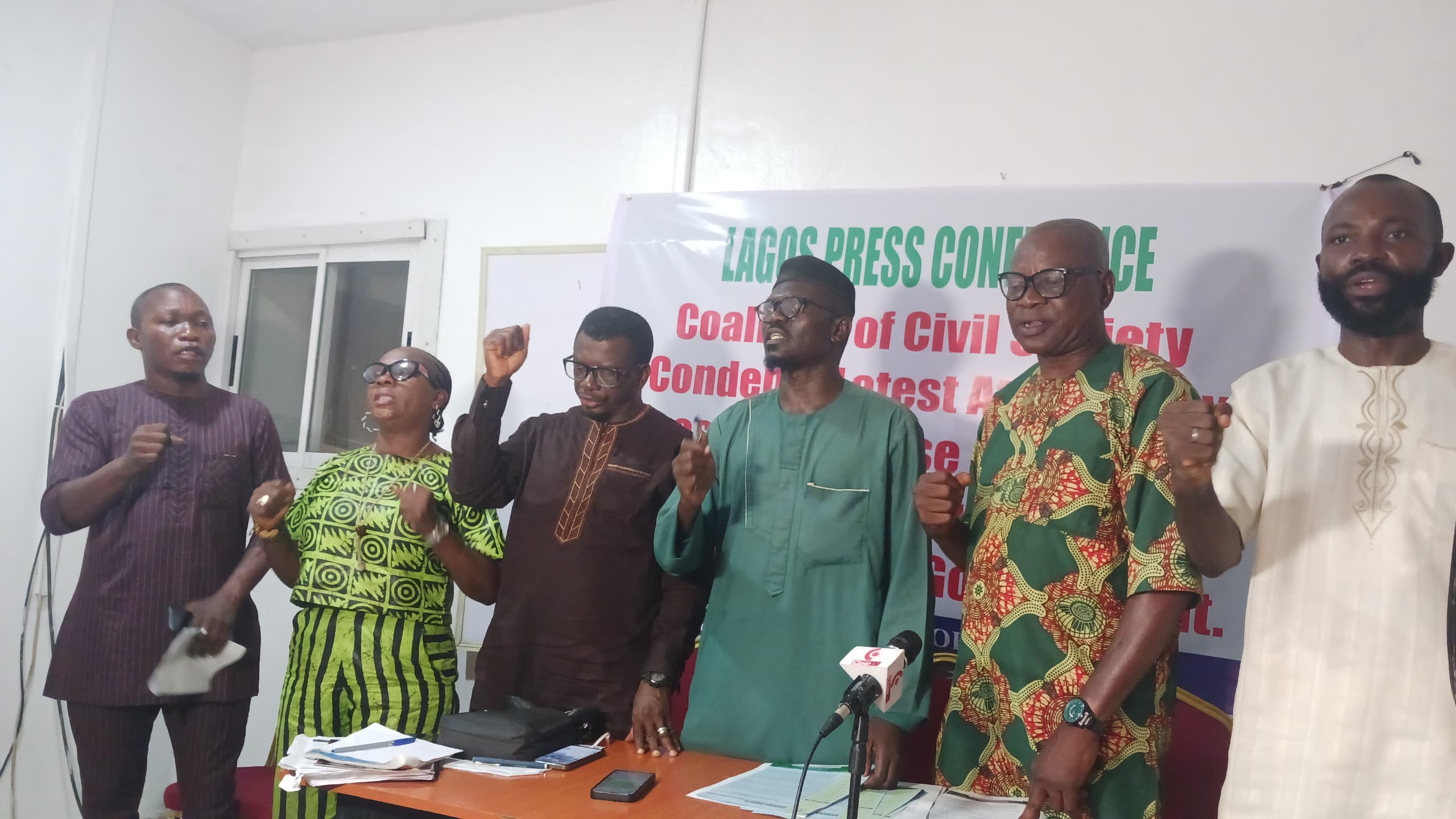
    The Coalition of Civil Society Group on Good Governance, comprising of the Human Rights Monitoring Agenda (HURMA); Campaign Against Impunity; Center for Economics and Human Rights Advancement and Ideal Society Advocacy Group, on Thursday 10 October,2024 has called on the Lagos State House of Assembly not to take any action capable of undermining local government autonomy.u

    The group in a press conference held in Lagos  said that the practice of lawmakers querying and sanctioning Local Government administrators was in total contradiction to council autonomy, thereby condemning in it entirety the latest attempt by the Lagos State House of Assembly and its Speaker Rt Hon Mudasiru Obasa ,to subvert the sacred autonomy of Alimosho Local Government and annex it as their colony.

    Speaking to newsmen,the Executive Director Human Right Monitoring Agenda (Hurma), Comrade Buna Olaitan lsiak who spoke on behalf of the group stated that the shameful attempt carried out by the lawmakers is not only a sacrilege but an unthinkable coup’d’etat and a deliberate attempt to soil the good name of President Bola Ahmed Tinubu,whom he described as a living legend of democracy and a die hard advocate of local government autonomy.

    “It is rather unthinkable that the very distinguished institution of democracy,the parliament,in a state like Lagos,can constitute itself into an inordinate autocrat, assuming power that is never given to it by any stretch of imagination. More shameful is it as it is coming just at the heel of a Supreme Court judgement, affirming the autonomy of local governments,a monumental achievement in the quest for true democratic governance and fiscal federalism in Nigeria”

    “It is essential that this landmark decision is not rendered s nullity through actions or policies that undermine the autonomy granted to our local governments. Local Government plays a critical role in governance, serving as the grassroots connection between the citizens and the state.Local government autonomy is essential for fostering democratic participation and improving service delivery by allowing local government to make decisions that reflects the needs and priorities of their communities”he said 

    Comrade Isiak Bunan went further to state that the State Assembly should stop interfering in the affairs of LGAs, adding that Alimosho should be free from undue interference and control from higher levels of government. 

    “Alimosho and all other local governments in the state are not appendages of the state assembly. They are independent tiers of government enshrined in our constitution and recently authoritatively pronounced by Nigeria’s highest court,”

    “We call on President Bola Ahmed Tinubu, as well as all governors and political leaders, to ensure that the autonomy secured through the ruling of the supreme court is implemented in full. It is imperative that all local government officials are empowered to perform their duties effectively, free from undue interference and control from higher levels of government.”he stated 

    The group commended the Governor of Lagos State,Mr Babajide Sanwo Olu for his swift intervention, affirming separation of powers of all the arms of government and the independence of local government, stating that if not for the governor’s proactive and timely intervention, the monumental abomination of Lagos State House of Assembly could have laid a bad and unforgettable precedent, thereby giving President Tinubu a bad name where ordinarily he should have claimed credit and probably set Lagos on fire and create unnecessary distraction for Governor Sanwo Olu that is busy thinking on how to move Lagos forward.

    While imploring the governor to continue in his efforts in defending and promoting the hard earned autonomy of local government throughout the state, saying it is essential to create an environment where local authorities can operate freely and make decisions that directly benefits the communities as it will empower the Chairmen to enhance service delivery and improve quality of life for all the residents.

    “Political leaders, particularly the leadership of State Assemblies and the Governors with vested interests, must recognize that local governments are not mere extensions of state authority, but rather autonomous entities that are vital to fostering development, enhancing accountability, and improving service delivery to our citizens.

    “We emphasize that respecting local government autonomy is not only a legal obligation but also a moral imperative that contributes to national cohesion and development as well as the enhancement of fiscal federalism that we have clamoured for decades.”he stated.

    He opined that as an organization dedicated in promoting good governance,the group is calling the governor to quickly engage with stakeholders at all levels so as to ensure that local government autonomy is respected and upheld so as to work together to build a stronger, more accountable local government system that reflects the needs and aspirations of the communities.

    Lending his voice, the Executive Director Campaign Against lmpunity, Comrade Shina Loremikan stated that the Lagos State Assembly has failed in its responsibility in giving the people the required democracy.

    “There is a serious attempt to subjugate the local governments under the authority of the state assembly in Lagos state to the extent that, judging by the current shenanigans of constitutional amendments to local government administration in Lagos state currently being undertaken by the Lagos state House of Assembly, the control of markets is to be taken away from local governments and put under the purview of Lagos State House of Assembly. How ridiculous! How could a legislative arm want to take over the executive responsibilities of a local government that has elected executive councils complete with its own legislative arm?

    “Authorities in Lagos have over the years allowed LAHA to cross the line of “decency” and this has given rise to a legislature that is usurping the powers of Governor and the LGs . Is Lagos House of Assembly bigger than the people who elected LG Chairmen or their councils who have the legal powers to remove an erring Chairman? This is utter nonsense, arbitrariness, ignorance, hypocrisy, arrogance, incompetence, recklessness and lawlessness!

    “How can a House of Assembly be purporting to do this and defending it? They have been getting away with this nonsense in the past but enough is enough! Even the issue of market control which led to the purported suspension of the Alimosho LG chairman is squarely on the residual list reserved for LG’s legislative arm. What is the business of a state assembly dabbling into that?,he said

    Also,the Executive Director ldeal Society Advocacy Group, Comrade Elijah Ajanu Ojo urges the legislatures to obey the rule of law, stating that the said matter is already in court, therefore the status quo should be obeyed and allow due process to be followed.

    “He said,the matter is already in court before the suspension,so ..,let us allow the law to carry its course so that we can continue to set good precedence and not bad precedence for the society”

    It will be recalled that on Monday, the Lagos State House of Assembly suspended Hon. Jelili Sulaimon, Chairman of Alimosho LGA, for “non-compliance, defiance and unyielding attitude

    The House announced at the October 7 plenary that the suspension was indefinite and would take effect immediately.


  • Governor Soludo Visits Markets, Encourages Monday Business Activities.

    Governor Soludo Visits Markets, Encourages Monday Business Activities.

    By Christian ABURIME

    It will be recalled that last Monday, Governor Chukwuma Charles Soludo, CFR, paid an unscheduled visit to Onitsha main market, where he issued a directive that shop owners should open and trade their wares on Mondays.

    The Governor also made commitments to intensify the provision of security every monday.

    Today, in continuation of last week’s visit, Governor Soludo again embarked on a snap tour of the various markets and locations across the state to monitor compliance with his directive that nobody should sit at home.

    Locations visited by the Governor include, Nkwo Igbo-ukwu, Afọr Nnobi, parts of Nnewi, Nkwọ Oraifite, Upper Iweka, Ochanja, among others, as people were seen moving about their lawful businesses amidst tight security by the law enforcement agencies

    The governor’s message was clear – everyone must work together to maintain both the public and the state’s economy.

    During the visits, Governor Soludo interacted with some traders, transporters, and residents, stressing the importance of adhering to the government directives.

    He also encouraged the business owners to innovate and find creative ways to continue operating their businesses while maintaining a safe environment.

    The governor’s proactive approach has been well-received by ndị Anambra, who appreciates his efforts to stimulate economic growth.

    His moves have also helped to boost morale among small business owners, especially small businesses who have been struggling to keep afloat.

    Many residents and traders who interacted with the governor equally lauded his hands-on approach to governance, with some commenting that they feel more connected to their leader because of his efforts to visit and engage with them.

    This approach has helped to foster a sense of community and togetherness, which is essential in times of crisis.

    Special Adviser to the Governor on Security, AVM Ben Chiobi Rtd, Barrister Patricia Igwebuike, Commissioner for Transport accompanied the Governor on the visit, while the Mayors received them at the various local government areas visited.

  • We Must Build A Virile Legislature For The Future,Says Rt Hon. Obasa.

    We Must Build A Virile Legislature For The Future,Says Rt Hon. Obasa.

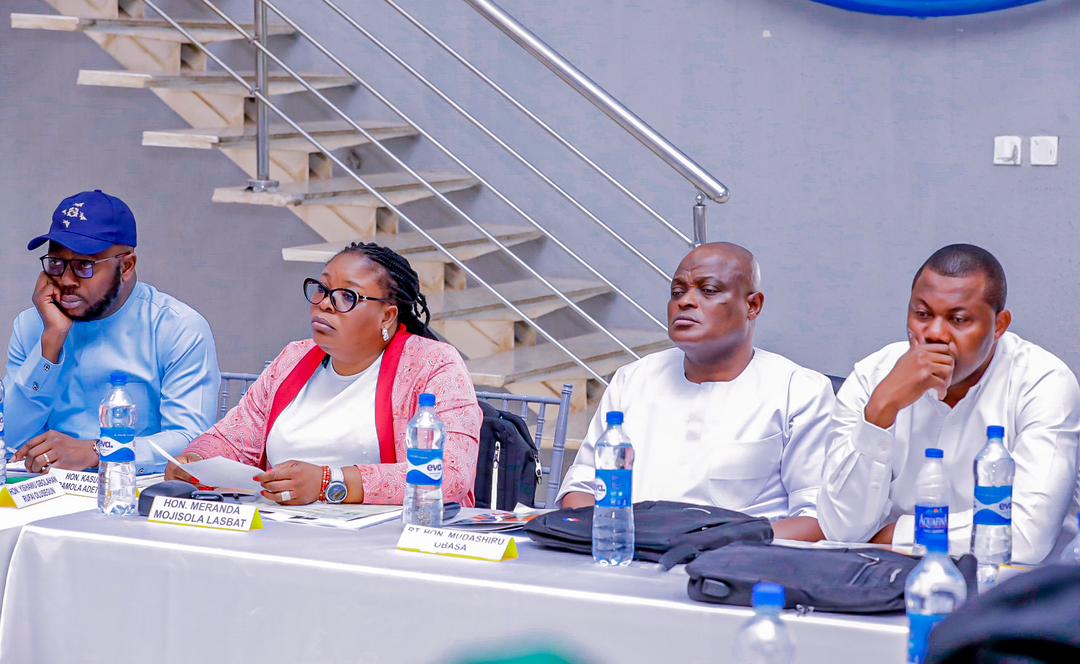
    L-R: Speaker of the Lagos State House of Assembly, Rt. Hon. Mudashiru Obasa, and Deputy Speaker Mojisola Lasbat Meranda (both middle) flanked by Majority Leader Noheem Adams and Deputy Majority Leader Adedamola Richard Kasunmu during a 3-day budget retreat for members and staff of the House held in Abeokuta on Sunday.

    Emmanuel lkpeama 

    The Speaker,Rt Hon. Mudashiru Obasa of the Lagos State House of Assembly, on Sunday, counselled members of the House to strengthen the legislative arm of government ahead of the future.

    Dr. Obasa gave the advice in Abeokuta, Ogun State at the opening of a three-day budget retreat for lawmakers and staff of the House with the theme: ‘Optimising the legislature’s power of the Purse’ for effective service delivery in Lagos State’.

    The Speaker challenged the lawmakers to be committed in their legislative duties as they must leave lasting legacies for the future, strengthen governance, responsibility and accountability.

    He charged the lawmakers on improved and effective legislative oversight functions being one of the responsibilities of the legislature.

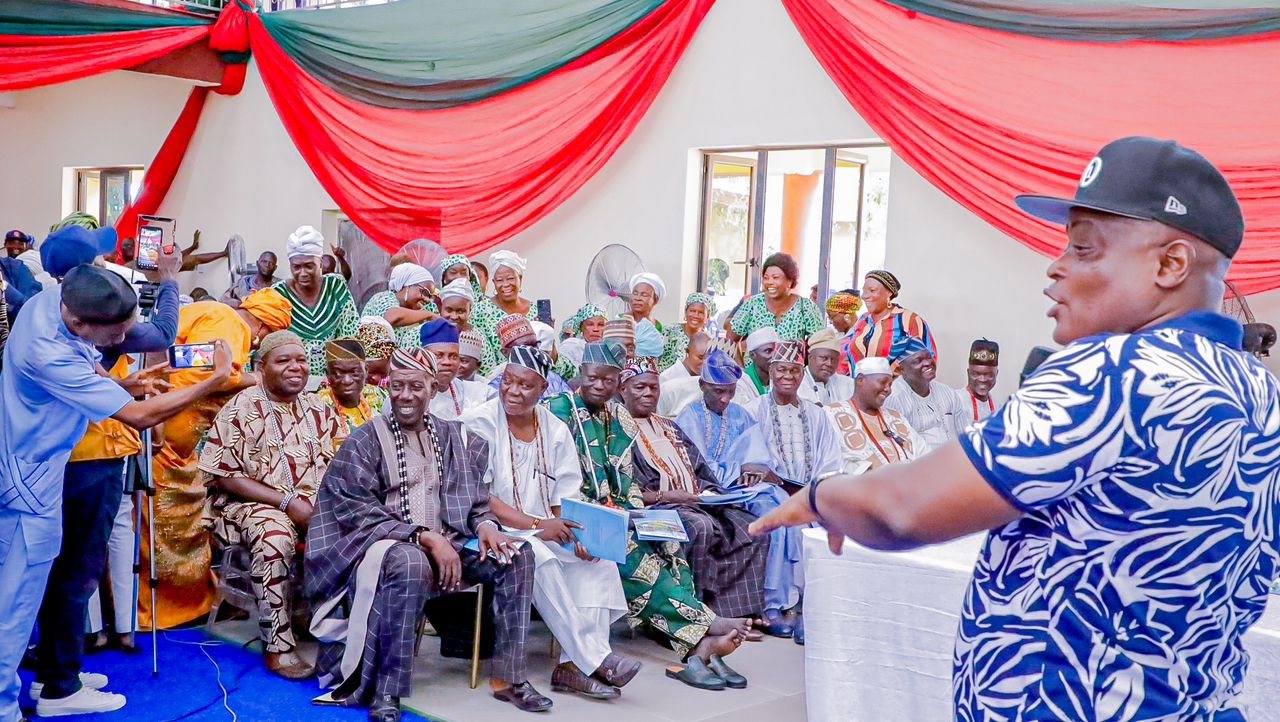
    speaker Mudashiru Obasa with participants at a 3-day budget retreat for members and staff of the Lagos State House of Assembly in Abeokuta, Ogun State on Sunday.

    “What we do now is really not about us; it is for the totality of the system.

    “I appreciate this budget retreat. Each one of us must be responsible in carrying out the assignments we are tasked with. This is very essential.

    “We carry out budget scrutiny based on what is presented by the executive. Once we give a go-ahead, it means the executive must comply and treat it accordingly because it has become a law.

    “Going forward, all the reports of each committee must be presented at the floor of the House. This will help us decide on how to act for the sake of transparency and accountability,” the Speaker said.

    He advised the lawmakers against docility in the task of ensuring that Lagos continues to weather economic storms.

    “We all have roles to play and, in doing that, sentiments and self-benefits must be removed. The day you start with self-benefit, you have become a failure.

    “If you do your job the way you should do it, you will earn your respect and will be held in high esteem by the Ministries, Departments and Agencies (MDAs).

    “We are here today again to look at how we can improve on the laws we make at the House of Assembly as well as our oversight functions.

    ‘Let’s continue to be dedicated and loyal and I am sure we will get there. Let’s always straighten the path for Lagosians and those coming behind us,” he urged.

    In his opening remark, the Clerk and Head of Service of the House, Barr. Olalekan Onafeko, described the retreat as an avenue to have insights into the state’s budget.

    While commending the Speaker, he urged the participants to “be attentive and take home fresh ideas and knowledge.”he submitted


  • Lagos Assembly Calls For Collaborative Efforts To End Food lnsecurity

    Lagos Assembly Calls For Collaborative Efforts To End Food lnsecurity

    ……As Council Chairman Wants Subsidy On Agric Products.

    Emmanuel lkpeama 

    The Lagos State House of Assembly has called on stakeholders collaboration to tackle the issue of food insecurity and build a future where youths can be empowered and famers thrive with abundant food.

    The Speaker Lagos State House of Assembly,Rt. Hon. Mudashiru Obasa made the appeal during the 9th Edition of the Annual Constituency Stakeholders Meeting of the Lagos State House of Assembly held at the Agege Local Government Secretariat .

    Hon Obasa in his address to his constituents identified food insecurity as a multi-faceted challenge requiring the efforts of the government and the people to resolve, stating that the state lawmakers has created a veritable environment for agriculture to thrive by passing the Anti-Open Grazing of Livestock Law.in September 2021.

    “The legislation makes it a punishable offence for cattle rearers to move their livestock through farmlands or occupy unapproved public places with their cattle.

    “We should cast our minds back to the crises that led to loss of lives arising from farmers-herders clashes across the country which necessitated the passage of the law in Lagos State. 

    “We passed this law to protect our farmers from being attacked and their farmlands from being encroached upon as it is happening in other States, where farmers’ crops are being destroyed, which invariably leads to shortage of food items in the country, and the attendant high prices,” he said.

    The Speaker went further to state that the Lagos Assembly was committed to ensuring food security in line with the United Nation’s sustainable development goals of eradication of poverty.

    “We at the Lagos State House of Assembly are committed to making Lagos an producing state and not just a consuming state in the agriculture value chain to tackle the present-day reality of food insufficiency.”

    “Our commitment is exemplified through transformational laws and policy supervision in the agricultural sector,” he said noting that with the collaboration of the Assembly, the government of the state has made giant strides in the agriculture sector.”

    “You will agree with me that the clamour for food sufficiency lately has been on the increase, hence this year’s Stakeholders’ meeting with the theme: Enabling Food Security for a sustainable future; youth participation and home grown farming is very apt, as it focuses on discourse towards addressing the hyper food prices and scarcity which invariably led to Food insecurity through the actions of some unpatriotic people that hoard Food items for personal gain to the detriment of other citizens.”

    “The Lagos State House of Assembly has introduced several initiatives to increase agricultural productivity and outputs in the state. These initiatives are anchored on building competence among farmers and improving agro-business climate and by direct intervention in agricultural activities.”

    “These initiatives include setting up of the 34-hectare Ikorodu Fish farm estate which has capacity of producing and processing 10, 000 tons of fish per year, with partnership with 400 fish farmers in the state.”

    The AGRIC-YES programme that was set up to build competence among youths and encourage their participation in various activities within the emerging agricultural value chain in the state.

    Another is the Oke-Aro and Gberigbe pig farm estates that currently partners with 1200 farmers have the capacity of housing and processing 88000 mature pigs per annum. And lastly, the Eko farmers market has been established in collaboration with private-sector partners to serve as a link between the agricultural producers and markets in order to ensure that farmers get their fair value for their produce.”

    He commended the Lagos State Government supports for agricultural activities while calling for more interventions to achieve the desired results.

    “To reduce the impact of food insecurity, the Lagos State Government has for some months been selling “Ounje Eko” which consisted of farm products at subsidized rates in various designated areas in the state, taking off 25% of normal prices. This commendable effort, which is being geared towards food sufficiency at reduced prices,has been viewed as a timely panacea to cushion the harsh effects of food shortage and insufficient income by many people in the state.”he submitted 

    He however pledged the collaboration of the Lagos State House of Assembly with the executive arm to develop comprehensive policies and programme for youth engagement in agriculture, investing in modern farming techniques, technology and research.

    The keynote speaker, Dr Akinyemi Olusegun of the Lagos State Ministry of Agriculture urged the youths and residents in the state to engage in urban farming.

    He said, “We are here to discuss the food insecurity in the land. We are here to tackle the challenges of hunger in the land and to do this, Agriculture is the solution. In Lagos, we are more than 22million and as a result we have a huge need for food. People want to eat and engage in food business. There is pressure for food supply and that is why in the Ministry of Agriculture that are experts in the field of Agriculture.

    “Our youths must engage in agriculture business and especially farming. There is home grown farming otherwise known as urban farming. We can engage in snail farming. We can grow vegetable and yam in our various homes. This is why the Lagos State government is encouraging us to go into farming.”he stated 

    Earlier, in his opening remarks, the Host and chairman of Agege Local Government Area, Mr Ganiu Egunjobi identified insecurity and non-availability of low interest loan for the teeming youths population as responsible for the food crisis.

    “This meeting cannot come at a better time. The problem responsible for the food shortage are many among which are insecurity that has prevented many farmers from accessing their farms. Farming in Nigeria is no longer attractive to the teeming youths.

    “I want to suggest to the government at all levels to subsidise farming and also give loans at very low interest to farmers. The government should also improve on existing physical infrastructures in farming communities that would discourage urban migration and encourage youths to embrace farming. Farming and youth unemployment are recurring issues which require multidimensional interventions to tackle,” he said.

    Investigator news reports that this year’s stakeholders’ meeting is the ninth in the series and has the theme: ‘Ensuring Food Security for Sustainable Future: Youth Participation and Home-Grown Farming’ as the constituency stakeholders’ meeting was held simultaneously across the 40 constituencies in the state.

    Those in attendance include the Council Chairman Mr Ganiyu Egunjobi,his Vice Chairman, leader of the council and other councilors, traditional leaders, political stakeholders, youths and women among others 


  • International Girl Child Day: 16 Year Old Girl,Isabel Anani Presides Over Plenary ln Lower Chamber. 

    International Girl Child Day: 16 Year Old Girl,Isabel Anani Presides Over Plenary ln Lower Chamber. 

    Felicia Asuquo, Abuja 

    History was made in the House of Representatives as Isabel Anani, presided over plenary in the lower chamber.

    House Speaker, Tajudeen Abbas, allowed Miss Anani, a 16-year-old gender advocate, to preside over proceedings of the green chamber on Thursday to commemorate the 2024 International Day for the Girl Child.

    He took to his verified X handle to share the pictures of Anani taking charge of legislative business. Tajudeen described the session as unprecedented.
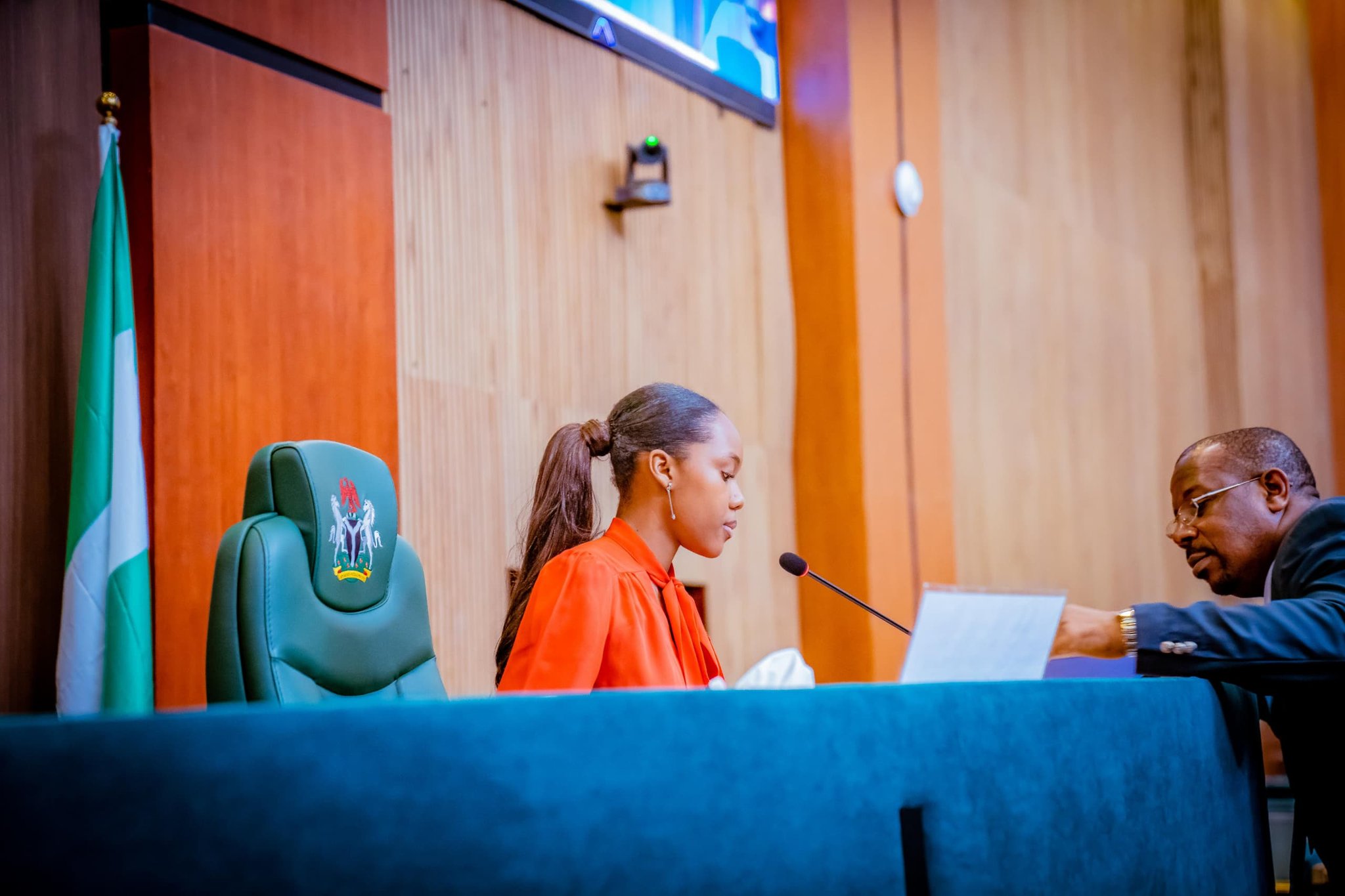
    “Today, history was made on the floor of the House of Representatives when I symbolically allowed a 16-year-old advocate, Ms. Isabel Anani, to preside over the plenary session, enabling her to conduct the session, the first of its kind in the history of the House of Representatives,” Tajudeen stated.

    “It is part of the celebration for this year’s International Day for the Girl Child. Women’s inclusion and participation in governance is at the heart of the 10th House Legislative Agenda.

    “As a pioneering voice on Nigeria’s Technical Working Group for Adolescent Health and Wellbeing and UNICEF Young Influencer, Isabel’s passion ignites positive change. Selected through a rigorous nationwide search, Isabel’s leadership exemplifies the power of youth.”

    According to the Speaker, Anani’s “remarkable journey will undoubtedly inspire” her peers and younger ones.

    “.Let us recognise Isabel’s achievement and celebrate the unwavering spirit of Nigerian girls who courageously pursue their dreams despite adversity,” he said.