President Muhammadu Buhari has arrived in the southeastern state of Imo,
Buhari is in the state to commission Okigwe and Orlu roads as well as the rehabilitated House of Assembly Complex in Owerri.

President Muhammadu Buhari has arrived in the southeastern state of Imo,
Buhari is in the state to commission Okigwe and Orlu roads as well as the rehabilitated House of Assembly Complex in Owerri.

The National Industrial Court of Nigeria, Abuja, on Monday, adjourned the suit filed by the federal government against the Academic Staff Union of Universities (ASUU) to September 16 following an application for consolidation by the Socio-Economic Rights and Accountability Project (SERAP).
Justice P.I. Hamman adjourned the matter after the counsel to SERAP, Ebun-Olu Adegboruwa (SAN), said his client had filed a related suit asking the court to compel the government to honour its 2009 agreement with the striking university lecturers on September 8.
Justice Hamman held that SERAP’s application for consolidation was not ripe for hearing.
Read Also: Five killed in Ifeanyi Ubah’s convoy attack – Police
He said the matter would be assigned to another judge for full adjudication as the judiciary vacation ends.
He ordered parties in the suit to file and exchange their written submissions.
Earlier, counsel to the government, Tijjani Gazali (SAN), had opposed the application seeking to consolidate both suits for being unripe for consolidation.
Counsel to ASUU, Femi Falana (SAN), said he was aware of the suits before the courts.

The federal government has ordered the immediate dissolution of the anti-vandal unit of the Nigerian Security and Civil Defence Corps (NSCDC) nationwide.
Commandant General of the Corps Dr Ahmed Audi, made the announcement Tuesday in Abuja, before a closed-door meeting with 36 States Commandants and the FCT Commandant as well as top management members of the agency held at its headquarters.
According to the NSCDC boss, the dissolution was due to the uninspiring performance of the unit in the past few months and the need to sanitise and bring fresh ideas and perspectives to the operations of the unit.
Audi said the Minister of Interior, Ogbeni Rauf Aregbesola, approved the dissolution of the unit, adding that all unapproved road-blocks mounted by NSCDC personnel across the country are also dissolved with immediate effect.
Audi explained that following unprecedented reports of crude oil thefts, vandalism of critical national infrastructures, and collusion of some personnel with criminals, the government had come to the inevitable conclusion that the present Anti Vandal Unit cannot deliver on its mandate.
He said while a comprehensive investigation and probe of the activities of its personnel allegedly involved in collusion and collaboration with criminals are ongoing, the Corps would leave no stone unturned to bring perpetrators of illegality amongst its ranks to book.
Audi assured that personnel who were found wanting at the end of the ongoing probe would be punished appropriately.
He said the government cannot continue to watch the resources of the country being depleted by criminals, while those charged with the responsibility of protecting them watch helplessly or collude with the criminals.

As the 2023 election draws near, Daniel Bwala, a spokesperson for the Atiku Abubakar presidential campaign, on Saturday warned Peter Obi that “the thin line” between his speaking charges in his US tours and “fellowshipping with the Federal Bureau of Investigation, FBI” is not far.
It was reported that Bwala’s caution comes as Nigerians in the U.S. host Obi, the Labour Party flag-bearer for the 2023 presidential election, in five U.S. states.
The presidential hopeful is expected to address town hall meetings and grant interviews in major cities of the leading democracy in the world.
A flier has been doing the rounds on social media showing that Obi’s townhall meeting with diasporan Nigerians in Atlanta, USA, on Friday night, has been monetised. This has elicited criticisms and jibes from his antagonists.
Obi has in the recent past been in some western nations where he addressed Nigerians and friends of the country in packed-to-capacity halls.
Earlier, Obi had met with some Nigerians in Germany, Italy, and Canada over his presidential ambition.
He had also visited the Vatican City in Rome, where he attended the ceremony where a Nigerian, Bishop Peter Okpaleke of Ekwulobia Diocese, was elevated to a Cardinal in the Catholic Church.
“If @NgLabour have the ears and attention of @PeterObi, pls ask him to immediately desist from the current speaking charges in his US tours.
“The thin line between it and fellowshipping with FBI is not far,” Bwala wrote in his known Twitter handle.

It was a time of fear and anguish for the people of Ojiogu and Okpochiri Ukwagba Ngbo in Ebonyi State’s Ohaukwsu Local Government Area, following an alleged attack on them by their neighbours within the boundary area of Benue and Ebonyi States, which left many dead and others injured and missing.
This occurred when gunmen stormed a drinking establishment in Akwuke, Enugu South Local Government Area, Enugu State, and killed a pregnant woman and a vigilante member.
Aside from the killings, Vanguard has confirmed that properties worth millions of naira were destroyed as a result of the heinous incident in Ebonyi.
According to an eyewitness who spoke on the condition of anonymity, the attackers of Ngbo people in Ebonyi were both Benue indigenes (warlords) and Ezza living within the boundary areas.
“I saw the people who attacked us,” he claims. They were natives of Benue and Ezza. What happened was typical of an annual development bordering on land dispute.
“This conflict is caused by both sides of the divide’s desire for land, particularly for farming.” One person was killed, many others were injured, and many are now displaced.
“It happens every year during the rainy season.” It’s a typical land dispute in the neighbourhood. Many people fled for safety during the incident. Those whose homes were destroyed will now be forced to flee.
“They don’t have a place to go. They will seek refuge at the homes of their brothers, sisters, and in-laws. Benueans banded together to fight the Ngbos. It is what I witnessed on the ground.”
According to the findings of the Coordinator, Ngbo North Development Centre, DC, Echem Onyekachi, seven corpses have been discovered as a result of the incident.
“As of now, we have discovered seven bodies, six injured people, and numerous houses and shops that have been burned down in various locations.” Some people are still unaccounted for.
“Previously, we had clashes with the people of Benue State’s Ado Local Government Area.” As a result, this type of crisis always occurs during this time period.
“I believe the Agila people of Benue State are to blame for this crisis.” Anyone who calls Ezza is on his or her own. There is no conflict or crisis between the Ngbo and Ezza peoples. I believe that the Agila people are to blame for this crisis. It is a land-related problem.
“The government should write to the National Boundary Commission (NBC) to request land demarcation between the Ngbo and Agila peoples.” The crisis will worsen unless the government intervenes. It has been over a century. It is higher than my grandfather.”
In addition, Eze Moses Ekpe, Town Union President for Ukwagba Community, told Vanguard over the phone that 15 corpses had been discovered in Ngbo’s affected communities.
According to him, the search is still ongoing to provide the community with information on the number of casualties and those displaced.
“We notified the Commissioner of Police as well as other government agencies.” Today, the CP sent some officers there. There are far too many victims. We’re still looking. As of now, 15 people have been killed, and many more are missing. Houses were set on fire, and farmlands were destroyed.
“We’re still finding dead bodies, which is why I said we’re still looking.” We want the government to assist us in beefing up security there. The attack was launched by the Ezza people.”
Confirming the incident, the Chairman of Ohaukwu Local Government Area, Clement Odah, condemned it harshly and assured everyone that no stone would be left unturned in uncovering the true circumstances that led to such an unwarranted attack and loss of lives and property.
“The Ohaukwu Local Government Council has received with concern a report of security breaches and an attack on the innocent people of Ojiogu and Okpochiri Ukwagba Ngbo on Monday, June 27, 2022.”
“The council has liaised with appropriate security agents to move into the troubled area immediately, while working tirelessly with the relevant stakeholders to ensure a swift return of peace and normalcy to Ukwagba.”
“Our heartfelt condolences go out to all the affected families and beloved brothers from the affected villages, as well as the entire Ngboejeogu clan.”
“The Council reaffirms our commitment to promote and propagate peace throughout Ohaukwu Local Government Area and in all communities.” The Ebonyi State government, led by our peace-loving governor, has worked tirelessly to restore peace throughout the state, and all hands must be on deck to complete the task of creating a peaceful Ebonyi State where love and unity reign supreme.
“Once again, our people are assured that the government will not rest until total peace is restored in all parts of the Local Government, particularly in the Ukwagba Ngbo community.”
Mr. James Oche, Executive Chairman of Ado LGA in Benue State, described the attack as strange and added, “I completely doubt if our people are involved.”
“There is no crisis in Ebonyi that we are aware of.” This side of the divide has recently enjoyed relative peace. We have complete control over our people, and there is no reason to believe that they have been involved in anything.
“This is strange. This is strange, and I seriously doubt that our people are involved. I’ll contact the security operatives under my command and then contact you. I’d like to state that I’m hearing this for the first time, and I was unaware that there was a problem with border security.”
Several calls to the State Commissioner of Police, CP Garba Aliyu, and the Command’s Public Relations Officer, PPRO, Chris Anyanwu, were not returned at the time of this report.
During the Enugu gunmen invasion, which killed a pregnant woman and a vigilante member, the daredevils also shot a secondary school girl, who is now being treated in an undisclosed hospital.
According to reports, three large gunmen wearing masks stormed the relaxation centre around 8:00 p.m. on Saturday and ordered everyone to lie down.
The owner of the joint, who also lives in the compound where he operates the drinking establishment, sensed danger and fled through the back door, but his pregnant wife was not so fortunate, as the men pursued her into her kitchen and shot her dead.
A young man named Nonso, one of the vigilante members, who was having a good time at the joint attempted to flee and was also shot dead.
The pregnant woman’s maidservant, who was also working in the joint, was shot in the leg and is being treated at a hospital.
The gunmen had previously entered a compound within Akwuke and demanded to see another young man, but the man was not at home, prompting them to come for the owner of the drinking joint, Felix Onyia, the immediate past councillor representing Akwuke ward at the Enugu South legislative assembly.
An eyewitness who requested anonymity stated that he witnessed everything live.
“I was there and witnessed everything.” I had asked the woman to prepare the fish, and I was drinking while waiting for it when we heard “lie down all of you.”
“Nwagod Onyia was sitting on the other side with Nonso, the assassinated vigilante.” When they told us to lie down, I dashed into one of the rooms and jumped through the window. They didn’t shoot at me. They shot NwaGod’s wife and Nonso, the vigilante man, I later learned. “They also shot the girl who was working in the bear palour,” he added.
He claimed that only God saved him because he could have been shot. He stated that others who were present at the drinking establishment were not harmed because it appeared that they had come specifically for the former councillor, Hon. Felix Onyia, alias NwaGod.
“The fact that they came straight to his house and shot his wife when he escaped indicates that they came specifically for him,” a local said.
He stated that he had no idea why they came for him, but that something must have prompted the visit of the gunmen who arrived in a vehicle for the attack.
When contacted by phone in the morning, Police Spokesman Daniel Ndukwe demanded a message to allow him to address the issue quickly, but he has not responded as of the time of filing this report, despite hours of sending a message both on WhatsApp and SMS.
“Please send me SMS so that I can address it as soon as possible,” Ndukwe requested.

The race for the All Progressives Congress (APC) presidential ticket has narrowed to a straight contest between four leading aspirants – Vice President Yemi Osinbajo, former governor of Lagos State Bola Tinubu, former minister of transportation Rotimi Amaechi, and Senate President Ahmad Lawan – on the day of the APC presidential primary election.
Kayode Fayemi, Governor of Ekiti State and Chairman of the Nigeria Governors’ Forum (NGF), and Ebonyi State Governor Dave Umahi are the two candidates on the outskirts.
As Vice President, Osinbajo should depend on President Muhammadu Buhari’s backing, as well as the benefit of incumbency. However, after notifying Nigerians that he had a favoured candidate whose name he indicated he would keep hidden, and subsequently requesting APC governors to back him in selecting his successor, Buhari announced on the day of the primary election that he has no nominee.

However, Osinbajo is one of the most likely candidates to run on the APC ticket. There are suspicions that Buhari will want the VP to carry on with his administration’s programmes, and if that is the case, an unpublicized endorsement and support from the President can go a long way toward tipping the scales in Osinbajo’s favour.
However, Osinbajo will almost certainly share South-West votes with Tinubu and Fayemi, which may erode his zonal advantages.

Tinubu, the APC’s national leader, has always been the man to beat in the race for the party’s presidential ticket for the 2023 general elections. In addition to his strong political structure, Tinubu benefits from a widely reported agreement in which Buhari agreed to hand over to him (Tinubu) at the end of his (Buhari’s) tenure. According to Tinubu’s camp, the agreement served as the foundation for Tinubu’s support for Buhari’s election as President in 2015.
Tinubu paid a visit to Buhari at the Presidential Villa before announcing his intention to run for president in 2023. The purpose of the visit was to solicit Buhari’s support and thus activate the contentious agreement between the two men.
Buhari has not openly supported Tinubu’s ambition thus far, and the President’s body language does not suggest that Tinubu is his preferred candidate. Tinubu’s recent outburst, while speaking to APC delegates in Ogun State, is seen as an angry reaction to the President’s refusal to support his ambition.
Tinubu stated that Buhari would not have become President without his support, and that he expects Buhari to reciprocate by handing him the presidency.
The APC national chairman, Abdullahi Adamu, a Buhari supporter, has hinted that the party may sanction Tinubu for his remarks, and the presidency responded on the eve of the national convention by declaring that no single person should claim the glory of Buhari’s victory in 2015.
In a statement issued in response to Tinubu’s claims, Senior Special Assistant to the President on Media and Publicity Garba Shehu, clearly speaking for Buhari, stated that the manner in which Buhari was elected in 2015 was unrelated to the 2023 general election.
“What matters is the future: the policy platforms, ideas, drive, and resolve to take over the President’s stewardship of our country and build on his legacy to make our country better than it has ever been.” “The person most demonstrable in those qualities is the one to lead our party and our country forward,” the presidential aide added in the statement, implying that Tinubu is not Buhari’s ideal successor.
However, in a primary election in which aspirants are given a level playing field, as promised by Buhari, Tinubu should be optimistic.
Amaechi lacks the incumbency factor which favours Osinbajo, and the strong political structure which is Tinubu’s major advantage. But the Rivers State governor is a dogged fighter who has paid his dues in the APC. He is also one of a small circle of APC politicians who are regarded as Buhari’s possible preferred successors.

Amaechi is very close to Buhari, having led the President’s election campaigns in 2015 and 2019.
In addition, the former Speaker of the Rivers State House of Assembly has strong connections in the North, where he is widely accepted as demonstrated by his recent title as Dan Amanar Daura (trusted son of Daura) by the Emir of Daura, Umar Farouk.
Although a controversial move by APC national chairman Adamu to declare him as the consensus candidate was foiled on June 6, Senate President Ahmed Lawan remains a formidable force in the race for the party’s presidential ticket.
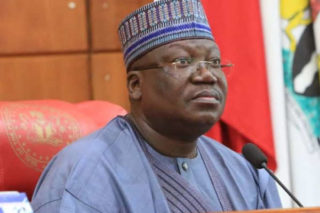
The fact that Lawan is the only major aspirant from the North is enough advantage on its own, going by the region’s penchant to vote in a bloc, and according to ‘Northern interests’. The Northern APC governors may have backed power shift to the South, but the Senate President remains in race for APC presidential ticket.
Minutes before Buhari’s meeting with the presidential aspirants on June 4, APC governors from the North issued a joint statement backing the power shift to the South. The Northern APC governors said in the statement that after Buhari’s eight years, a Southerner should become Nigeria’s President.
To emphasise the position of the Northern governors, who had before now opposed their Southern counterparts’ call for power shift to the South, Jigawa State Governor Abubakar Badaru – the only sitting Northern governor in the presidential race – withdrew from the contest.
Southern groups and stakeholders, including the Southern Governors Forum, have hailed the gesture by the Northern governors.
But Senate President Ahmed Lawan – regarded as one of the leading aspirants – is still in the race.
Lawan emerged as one of the leading aspirants for the APC presidential ticket after former Vice President Atiku Abubakar was elected the flagbearer of the opposition Peoples Democratic Party (PDP). Lawan, from Yobe State, is from the North-East, like Atiku and many party stakeholders believe he should get the APC ticket to counter regional advantages Atiku’s candidacy would give the PDP in the North, which has a large voting population.
Also, despite the APC Northern governors’ endorsement of power shift to the South, the North-East as a geopolitical zone is arguing that it should be given the opportunity to produce the President, having not had the privilege since Nigeria returned to democratic governance in 1999.
Lawan’s endorsement by APC national chairman Adamu could also be an indicator of where Buhari’s interests lie. Adamu is Buhari’s man and he reportedly said he arrived at the decision to name Lawan consensus candidate with the President’s permission. Despite Buhari’s declaration that he has no candidate, Adamu’s action may suggest otherwise.
The Senate President’s president in the presidential race may negate the effect of the Northern governors’ decision to support the power shift to the South.
Just like Tinubu, a level playing field in the APC presidential primary will also favour Lawan.
With most of the leading aspirants coming from the South, Northern delegates, and by extension, Northern votes, will be decisive in the outcome of the APC presidential primary.
The Northern votes are a factor that can work in the favour of Senate President Ahmed Lawan – unless the Northern APC governors are able to get their delegates to refrain from voting for the Yobe State politician.
Northern votes decided the PDP presidential primary in favour of Atiku Abubakar. A similar outcome is not unlikely in the APC primary election.
Tinubu, Osinbajo and Amaechi are going to be successful to the extent that they are able to get the votes of the Northern delegates. Tinubu will be counting on his large political structure to attract the votes of delegates from the North. Osinbajo and Amaechi also have considerable support in the region.
Two thousand, three hundred and forty delegates will vote at the APC presidential primary election.
The 2,340 are made up of three elected adhoc delegates from each of the 774 local government areas (LGAs) in the country and the six Federal Capital Territory (FCT) area councils.
The new Electoral Act 2022 did not allow voting by statutory delegates in political party primary elections. An amendment passed by the National Assembly, aimed at reversing the situation, has not been signed into law by the President.
As a result, public officials such as the President, Vice President, members of the National Assembly, governors and their deputies, members of the state houses of assembly, chairmen of councils, councillors, and members of the national working committee, amongst others, who are regarded as statutory delegates in political parties, would not vote in the presidential primary election.
The development will have a major impact on the APC presidential primary election. With statutory delegates ‘disenfranchised’ by the Electoral Act 2022, the number of delegates that would vote in the APC primary election has dropped from 7,800 to 2,340.
The 2,340 are made up of three elected adhoc delegates from each of the 774 local government areas (LGAs) in the country and the six Federal Capital Territory (FCT) area councils.
The non-participation of statutory delegates may affect the electoral fortune of some aspirants, particularly those who ordinarily should be banking on ‘jumbo delegates’ – a term that refers to a situation where a state has a huge number of delegates due to the presence of a large number of public officials.
Lagos, Tinubu’s stronghold, has a large number of APC public officials and if statutory delegates were to be involved in the primary election, the state will have about 304 delegates. But without statutory delegates, as dictated by the Electoral Act 2022, Lagos is going to the primary election with just 60 delegates – three delegates each from its 20 LGAs.
Going by the previous computation that included statutory delegates, Lagos was among the top five states with the highest number of delegates. But without the statutory delegates, the state is now occupying the 19th position in the number of delegates.
A breakdown of the number of delegates that would represent the various states and the FCT in the APC presidential primary election shows that the North-West has the highest number with a total of 558 delegates.
The South-West is second with 411 delegates, followed by South-South with 369 delegates. The North-Central occupies the 4th position with 363 delegates. The North-East is next with 336 delegates.
The South-East, with 288, has the lowest number of delegates that will be voting in the APC presidential primary election.
South-West: Lagos – 60, Ekiti – 48, Ogun – 60, Osun – 90, Oyo – 99, Ondo – 54. Total – 411.
South-South: Akwa Ibom – 93, Bayelsa – 24, Cross River: 54, Delta – 75, Edo – 54, Rivers – 69. Total – 369.
South-East: Abia – 54, Anambra – 63, Enugu – 51, Ebonyi – 39, Imo – 81. Total – 288.
North-East: Adamawa – 63, Bauchi – 60, Gombe – 33, Borno – 81, Yobe – 51, Taraba – 48. Total – 336.
North-Central: Kogi – 63, Kwara – 48, Benue – 69, Plateau – 51, Nasarawa – 39, Niger – 75, FCT, Abuja – 18. Total – 363
North-West: Kaduna – 69, Kano – 132, Katsina – 102, Kebbi – 63, Jigawa – 81, Sokoto – 69, Zamfara – 42. Total – 558.

Sugar seems to have developed a reputation as the big bad wolf in relation to health. We have reported on numerous studies associating sugar intake with increased aging, cardiovascular disease, obesity and even cancer. Such research has led to many health experts around the globe calling for reductions in recommended sugar intake, with some saying we should cut out sugar completely. But is it really that bad for our health?
There are many different types, including glucose, fructose, lactose, maltose and sucrose. Some of these sugars, such as glucose, fructose and lactose, occur naturally in fruits, vegetables and other foods. But many of the foods we consume contain “added” sugars – sugar that we add to a product ourselves to enhance the flavor or sugar that has been added to a product by a manufacturer.
The most common sources of added sugars include soft drinks, cakes, pies, chocolate, fruit drinks and desserts. Just a single can of cola can contain up to 7 tsps of added sugar, while an average-sized chocolate bar can contain up to 6 tsps.
It is added sugars that have been cited as a contributor to many health problems. In December 2014, MNT reported on a study in the journal Open Heart claiming added sugars may increase the risk of high blood pressure, even more so than sodium. And in February 2014, a study led by the Centers for Disease Control and Prevention (CDC) associated high added sugar intake with increased risk of death from cardiovascular disease (CVD).
A 2020 study published in The American Journal of Clinical Nutrition suggested that consumption of sugar-sweetened beverages increases weight gain in both children and adults, while a review paper from the World Health Organization (WHO) notes an increase in the consumption of such beverages correlates with the increase in obesity.

Sugar seems to have developed a reputation as the big bad wolf in relation to health. We have reported on numerous studies associating sugar intake with increased aging, cardiovascular disease, obesity and even cancer. Such research has led to many health experts around the globe calling for reductions in recommended sugar intake, with some saying we should cut out sugar completely. But is it really that bad for our health?
There are many different types, including glucose, fructose, lactose, maltose and sucrose. Some of these sugars, such as glucose, fructose and lactose, occur naturally in fruits, vegetables and other foods. But many of the foods we consume contain “added” sugars – sugar that we add to a product ourselves to enhance the flavor or sugar that has been added to a product by a manufacturer.
The most common sources of added sugars include soft drinks, cakes, pies, chocolate, fruit drinks and desserts. Just a single can of cola can contain up to 7 tsps of added sugar, while an average-sized chocolate bar can contain up to 6 tsps.
It is added sugars that have been cited as a contributor to many health problems. In December 2014, MNT reported on a study in the journal Open Heart claiming added sugars may increase the risk of high blood pressure, even more so than sodium. And in February 2014, a study led by the Centers for Disease Control and Prevention (CDC) associated high added sugar intake with increased risk of death from cardiovascular disease (CVD).
A 2020 study published in The American Journal of Clinical Nutrition suggested that consumption of sugar-sweetened beverages increases weight gain in both children and adults, while a review paper from the World Health Organization (WHO) notes an increase in the consumption of such beverages correlates with the increase in obesity.

Sugar seems to have developed a reputation as the big bad wolf in relation to health. We have reported on numerous studies associating sugar intake with increased aging, cardiovascular disease, obesity and even cancer. Such research has led to many health experts around the globe calling for reductions in recommended sugar intake, with some saying we should cut out sugar completely. But is it really that bad for our health?
There are many different types, including glucose, fructose, lactose, maltose and sucrose. Some of these sugars, such as glucose, fructose and lactose, occur naturally in fruits, vegetables and other foods. But many of the foods we consume contain “added” sugars – sugar that we add to a product ourselves to enhance the flavor or sugar that has been added to a product by a manufacturer.
The most common sources of added sugars include soft drinks, cakes, pies, chocolate, fruit drinks and desserts. Just a single can of cola can contain up to 7 tsps of added sugar, while an average-sized chocolate bar can contain up to 6 tsps.
It is added sugars that have been cited as a contributor to many health problems. In December 2014, MNT reported on a study in the journal Open Heart claiming added sugars may increase the risk of high blood pressure, even more so than sodium. And in February 2014, a study led by the Centers for Disease Control and Prevention (CDC) associated high added sugar intake with increased risk of death from cardiovascular disease (CVD).
A 2020 study published in The American Journal of Clinical Nutrition suggested that consumption of sugar-sweetened beverages increases weight gain in both children and adults, while a review paper from the World Health Organization (WHO) notes an increase in the consumption of such beverages correlates with the increase in obesity.
Sugar seems to have developed a reputation as the big bad wolf in relation to health. We have reported on numerous studies associating sugar intake with increased aging, cardiovascular disease, obesity and even cancer. Such research has led to many health experts around the globe calling for reductions in recommended sugar intake, with some saying we should cut out sugar completely. But is it really that bad for our health?
There are many different types, including glucose, fructose, lactose, maltose and sucrose. Some of these sugars, such as glucose, fructose and lactose, occur naturally in fruits, vegetables and other foods. But many of the foods we consume contain “added” sugars – sugar that we add to a product ourselves to enhance the flavor or sugar that has been added to a product by a manufacturer.
The most common sources of added sugars include soft drinks, cakes, pies, chocolate, fruit drinks and desserts. Just a single can of cola can contain up to 7 tsps of added sugar, while an average-sized chocolate bar can contain up to 6 tsps.
It is added sugars that have been cited as a contributor to many health problems. In December 2014, MNT reported on a study in the journal Open Heart claiming added sugars may increase the risk of high blood pressure, even more so than sodium. And in February 2014, a study led by the Centers for Disease Control and Prevention (CDC) associated high added sugar intake with increased risk of death from cardiovascular disease (CVD).
A 2020 study published in The American Journal of Clinical Nutrition suggested that consumption of sugar-sweetened beverages increases weight gain in both children and adults, while a review paper from the World Health Organization (WHO) notes an increase in the consumption of such beverages correlates with the increase in obesity.